
Next time you walk into an office, a hotel lobby, a hospital corridor, or a showroom, do something most people never do: look up. That ceiling overhead isn’t the building’s actual structural slab. It’s a false ceiling — a second, lower surface hung beneath the real one — and the type chosen there was a genuine decision, balancing acoustics, fire safety, services, budget, and looks.
Get that decision right and nobody notices, which is exactly the point. The room sounds calm, the lighting sits flush, the air conditioning hums quietly, and a technician can pop a tile to reach a cable without tearing anything apart. Get it wrong and the symptoms pile up fast: echoey meeting rooms, water-stained tiles in the pantry, fire inspectors raising concerns, and maintenance teams cursing whoever sealed the services behind solid plaster.
For architects, facility managers, and commercial property owners, knowing the main types of false ceilings — and where each genuinely belongs — saves money and headaches for years. This guide walks through the options used across commercial interiors, what each does well, where each fall short, and how to match the ceiling to the space.
What a False Ceiling Actually Does?
Before comparing types, it’s worth being clear that a commercial false ceiling is never just decoration. It’s quietly doing several jobs at once.
It conceals the messy reality above — ductwork, wiring, plumbing, and structural elements. It carries and integrates lighting, HVAC diffusers, sprinklers, smoke detectors, and speakers. It manages acoustics, controlling echo within a room and limiting sound passing between rooms. It contributes to fire safety and, in many systems, to thermal insulation and energy efficiency. And, increasingly, it defines the look and feel of the space.
The “best” ceiling type is simply the one that handles this particular combination of jobs for this particular room. Keep that in mind as we go through the options.
The Main Types of False Ceilings in Commercial Interiors
Gypsum Board False Ceilings
The most widely used type in commercial fit-outs. Gypsum boards are screwed to a metal framework to create a smooth, seamless, paint-ready surface — ideal for clean modern interiors, curved designs, shadow gaps, and concealed lighting. Gypsum also offers good fire performance in its rated variants.
Its main limitation is access: once built, it’s a fixed surface, so reaching services above means cutting and patching. It also dislikes moisture unless you specify a moisture-resistant board. Best for reception areas, premium offices, and any space where a flawless finish matters more than frequent service access.
Mineral Fibre Suspended Ceilings
The classic commercial ceiling — lightweight mineral fibre tiles dropped into an exposed or concealed metal grid. They’re popular for one big reason: they combine genuinely good sound absorption with full, easy access to the plenum above. Lift a tile, do the work, drop it back.
Mineral fibre tiles are graded by NRC (how much sound they absorb) and CAC (how well they block sound passing between rooms over a partition), which makes them easy to specify for acoustic needs. The trade-off is a more utilitarian look and lower moisture tolerance in standard grades. The default choice for open-plan offices, schools, and healthcare.
Metal False Ceilings
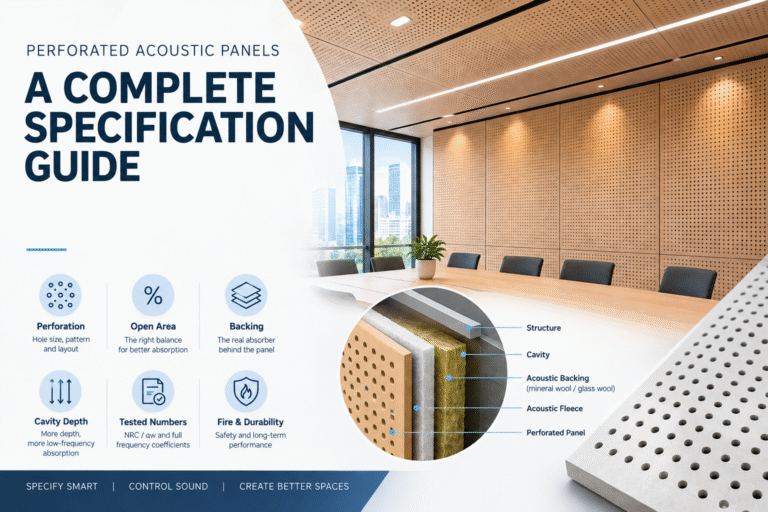
Aluminium and galvanized steel ceilings are the durable, design-forward option, and they come in several forms: open-cell grids for an airy industrial look, baffles and linear/strip systems for rhythm and direction, plank and hook-on tiles for a sleek finish, and perforated metal backed with acoustic fleece for sound absorption.
Metal is tough, fire-resistant, moisture-tolerant, low-maintenance, and often demountable for access. It’s pricier and, unless perforated and backed, not acoustically absorptive on its own. Favored in airports, malls, metro stations, transport hubs, and high-end commercial spaces.
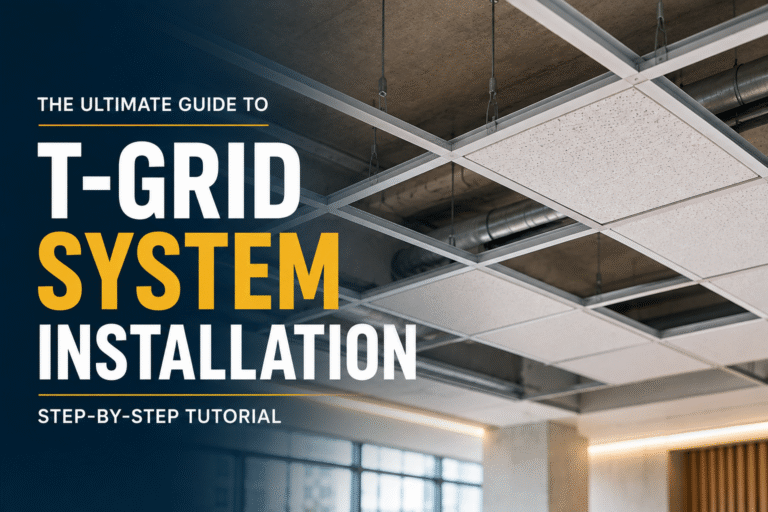
Grid (T-Grid) Suspended Tile Systems
Strictly speaking this is the framework rather than the tile — the exposed or concealed T-grid system that holds mineral fibre, metal, gypsum, or other tiles. It’s worth naming because the modular grid system is the backbone of most accessible commercial ceilings, prized for fast installation, easy tile replacement, and effortless service access.
POP (Plaster of Paris) Ceilings
A long-standing favourite in the Indian market. POP is mixed and applied over a frame on site to create smooth surfaces and intricate, custom moulded designs at a relatively low material cost. It allows shapes gypsum boards can’t easily match.
The downsides are real: it’s labour-intensive and messy to install, slower, more prone to cracking over time, and not demountable. Still common in hospitality and traditional commercial interiors where ornate detailing is wanted.
PVC False Ceilings
Lightweight, waterproof, and inexpensive PVC panels are the practical choice for wet and harsh environments — washrooms, basements, kitchens, warehouses, and budget fit-outs. They resist moisture and are easy to clean and install.
Honestly, though, PVC reads as economical, offers limited acoustic value, and can look cheap in premium settings. Right material, right place: function over finish.
Calcium Silicate Board Ceilings
Where moisture and fire performance are priorities, calcium silicate boards outperform gypsum. They’re dense, dimensionally stable, non-combustible, and shrug off humidity — making them ideal for service corridors, pantries, wet zones, and fire-critical areas. They cost more and are heavier and harder to work with, so they’re used selectively rather than everywhere.
Wooden and Wood-Look Ceilings
Timber and timber-finish systems — slats, baffles, and planks — bring warmth and a premium, biophilic feel to boardrooms, hospitality, and showrooms. Backed correctly with absorptive material and an air gap, slatted wood ceilings also deliver real acoustic control. They need fire treatment in commercial settings and careful detailing, but the visual payoff is high.
Acoustic Baffles, Rafts and Clouds
Rather than a continuous plane, these are discontinuous suspended elements — fins (baffles), floating panels (rafts and clouds) — used to absorb sound and define zones while leaving the structure partly exposed. They’re a strong fit for spaces with exposed-ceiling aesthetics that still need acoustic control, and they let you target treatment exactly where it’s needed.
Exposed / Open Plenum Ceilings
Not a false ceiling at all, but increasingly part of the commercial conversation: leaving the structure, ducts, and services visible for an industrial, open look, then adding acoustic clouds or baffles to tame the noise. It saves material and ceiling height but demands tidy services above, since everything is on show.
False Ceilings Across Different Spaces
The same menu of types gets applied very differently depending on the environment.
Offices
Open-plan offices lean on mineral fibre or perforated metal grids for the blend of absorption, service access, and value, often dressed up with gypsum bulkheads, baffles, or rafts over key zones. Confidential meeting rooms need attention to CAC so conversations don’t carry over the partition.
Retail and Hospitality
Retail and hospitality prioritize looks and brand experience — gypsum, metal, wood, and POP detailing feature heavily, with lighting integration treated as a centerpiece rather than an afterthought.
Educational Institutions
Schools and colleges need durability and speech clarity at a sensible cost. Mineral fibre acoustic ceilings dominate classrooms for their absorption and easy maintenance, while corridors and labs may use tougher, moisture- and impact-resistant options.
Auditoriums
Auditoriums are engineered acoustic environments where the ceiling is part of a designed sound plan — a mix of absorption, reflection, and bespoke metal, timber, or gypsum systems shaped to serve a large audience rather than convenience.
Home Theatres
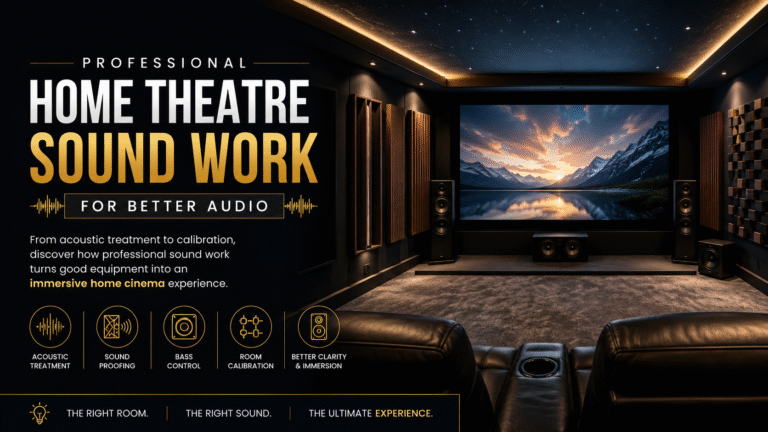
Home cinemas blend acoustic treatment (clouds and absorption above the seating) with a soundproofed, decoupled shell underneath, plus integrated lighting. Here the ceiling has to perform acoustically and contain sound, not just look good.
Residential Homes
In homes, gypsum and POP rule for seamless decorative finishes, with wood slat ceilings and felt clouds rising fast in living rooms and home offices as people seek both quiet and warmth.
Key Selection Criteria
When we help clients choose, these are the factors that actually drive the decision:
- Acoustics. Decide whether you need absorption (NRC) within the room, sound blocking between rooms (CAC), or both. This single question rules several types in or out.
- Fire safety. Confirm the system meets the fire requirements for your building category. Never let aesthetics override compliance.
- Moisture exposure. Wet and humid zones need PVC, calcium silicate, or moisture-resistant grades — standard gypsum and mineral fibre will fail there.
- Service access. If you’ll regularly reach the plenum, choose a demountable grid or metal system over solid gypsum or POP.
- Weight and structure. Heavier systems need a suspension grid rated for the load. Get this specified properly.
- Budget over the building’s life. The cheapest install isn’t always the cheapest ceiling — factor in maintenance, replacement, and downtime.
- Aesthetics and brand. In customer-facing spaces, the ceiling is part of the experience. Match it to the impression you want to create.
Expert Tips from the Field
A few things experience has taught us:
- Decide on access before you decide on finish. The most common regret we see is a beautiful solid ceiling that has to be cut open every time a service needs attention. Plan for the boring future, not just the launch-day photos.
- Mix types deliberately. There’s no rule that one space uses one ceiling. Use gypsum for the showpiece reception, mineral fibre for the open office, calcium silicate for the wet pantry. Right material, right zone.
- Specify acoustics with numbers. “Acoustic tiles” means nothing without NRC and CAC values. Ask for them and match them to the room’s real needs.
- Don’t ignore the partition-to-ceiling junction. A great ceiling tile won’t keep a meeting private if sound sneaks over the wall through the plenum. Detail the junction or use plenum barriers where confidentiality matters.
- Respect moisture and fire from day one. These aren’t areas to value-engineer away. The cost of getting them wrong dwarfs the saving.
- Coordinate trades early. Lighting, HVAC, sprinklers, and acoustics share the same plane. Plan them together or they’ll fight for space later.
Conclusion
There’s no single “best” false ceiling for commercial interiors — only the best fit for a given space. Gypsum delivers seamless style, mineral fibre balances acoustics with access, metal brings durability and design impact, PVC and calcium silicate handle moisture, POP allows ornate detail, and baffles and clouds add targeted acoustic control with a contemporary look. The skill lies in matching the type to the room’s real demands: how it sounds, how it’s serviced, how wet or fire-critical it is, and what impression it needs to make.
The smartest commercial projects rarely pick one ceiling and repeat it everywhere. They map the building zone by zone and choose deliberately — and that’s where good advice pays for itself many times over.
Frequently Asked Questions
What is the most common type of false ceiling in commercial interiors?
Gypsum board ceilings for seamless decorative finishes, and mineral fibre suspended tile ceilings for open-plan areas needing acoustics and service access, are the two most widely used in commercial spaces.
Which false ceiling is best for an office?
For open-plan offices, mineral fibre or perforated metal grid systems are usually ideal because they combine sound absorption, easy access to services, and good value. Premium and reception areas often add gypsum for a flawless look.
Which false ceiling is best for wet or humid areas?
PVC and calcium silicate ceilings handle moisture far better than standard gypsum or mineral fibre. They’re the right choice for washrooms, pantries, basements, and other humid zones.
What is the difference between NRC and CAC?
NRC (Noise Reduction Coefficient) measures how much sound a ceiling absorbs within a room, while CAC (Ceiling Attenuation Class) measures how well it blocks sound travelling between rooms over a partition. Offices with private rooms usually need to consider both.
Are metal false ceilings worth the higher cost?
Often yes, in the right setting. Metal ceilings are durable, fire-resistant, moisture-tolerant, low-maintenance, and demountable, which makes them cost-effective over time in high-traffic public spaces, even though the upfront price is higher.
Can I get acoustic performance from a decorative ceiling?
Yes. Perforated metal with acoustic backing, properly backed wood slats, and felt baffles or clouds all combine looks with genuine sound absorption. The acoustic work usually happens in the backing layer, so the build-up matters as much as the visible surface.
Is POP still a good choice for commercial interiors?
POP allows intricate custom designs at a low material cost and remains popular for ornate hospitality and traditional interiors. However, it’s labour-intensive, slower, prone to cracking over time, and not demountable, so it’s less suited to spaces needing frequent service access.