Acoustic ceilings solution is a common challenge in large indoor spaces such as offices, auditoriums, airports, restaurants, classrooms and shopping malls. Sound continuously reflects off hard surfaces like concrete ceilings, glass walls and flooring, leading to issues such as echoes, noise buildup and difficulty in communication.
This is where ceiling panels play an important role as an architectural solution. Installing acoustic ceiling panels or ceiling systems helps improve sound quality by absorbing sound energy and reducing reverberation.
In modern building design, acoustics are now just as important as lighting, ventilation, and interior décor. A well-designed acoustic ceiling solutions creates a comfortable environment where people can communicate clearly, stay focused and work more efficiently. This guide explains how ceiling panels improve acoustics in large spaces, the science behind how they work and why high-performance acoustic panels are becoming increasingly popular among architects.
Understanding The Problem of Poor Room Acoustics
Sound behaves differently in large open spaces compared to smaller rooms. As sound waves travel across a wide area, they reflect off multiple surfaces and do not fade easily. Without proper sound absorption, these reflections build up and create excessive noise.
Common acoustic issues in large spaces include:
- Echo and reverberation
- Unclear speech
- Background noise buildup
- Difficulty concentrating
Many large buildings face these problems when acoustic treatment is not applied, making the environment uncomfortable and noisy. This is why architects and designers are increasingly using ceiling panels and acoustic systems to control sound reflections.
What are Ceiling Panels And How Do They Work?
Acoustic ceiling panels are specially designed materials installed on ceilings to absorb sound instead of reflecting it.
They are typically made from materials such as:
- Mineral wool
- Glass fiber
- Fabric-based acoustic cores
- Perforated sound-absorbing panels
When sound hits these panels, it enters the porous material inside. The sound energy is then reduced through friction between air particles and fibers, converting it into a small amount of heat that does not return to the room.
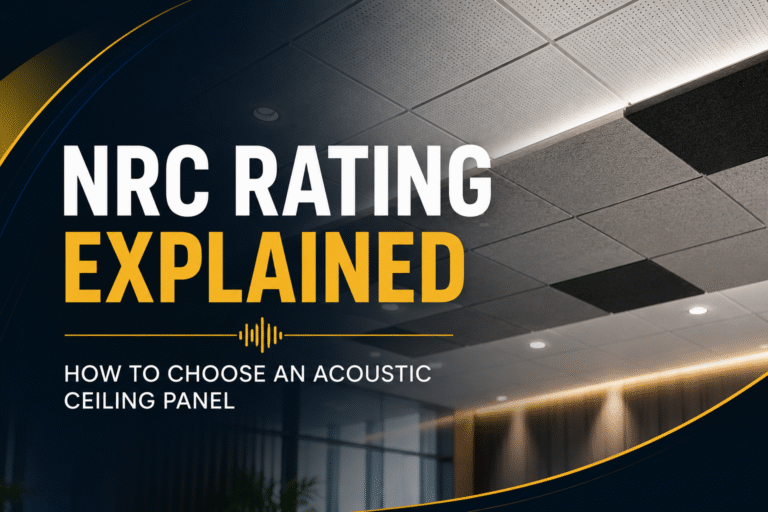
As a result, noise levels decrease and the space becomes acoustically balanced. The performance of these panels is measured using the Noise Reduction Coefficient (NRC), which ranges from 0 to 1. High-quality panels usually have an NRC of 0.75 to 0.85, meaning they absorb a large portion of sound.
Where Acoustic Ceiling Panels are Commonly Used?
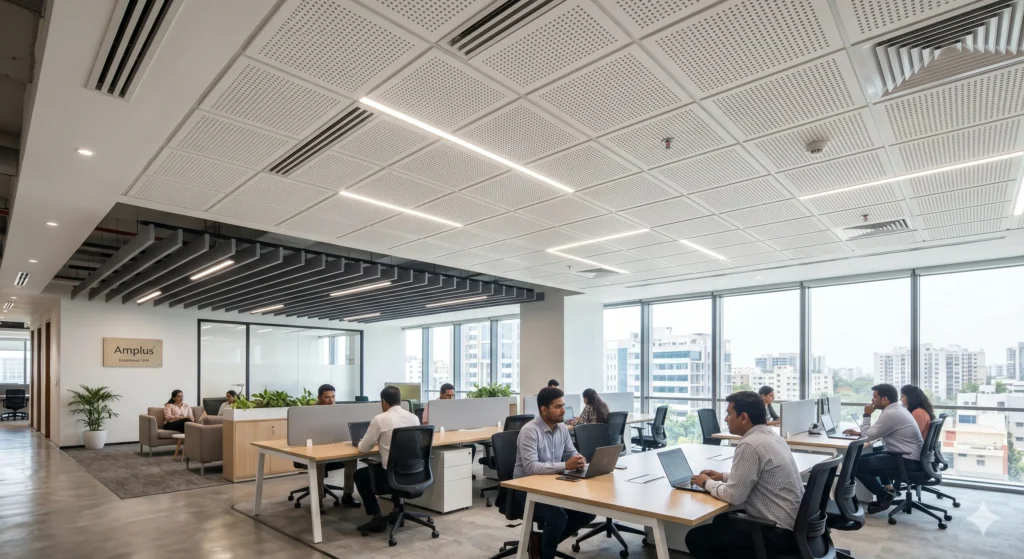
Due to their effectiveness, acoustic ceiling systems are widely used in:
- Offices and coworking spaces
- Schools and lecture halls
- Hospitals and healthcare facilities
- Hotels and restaurants
- Airports, libraries and auditoriums
Well-designed ceiling panels help create balanced and comfortable sound environments in all these spaces. You can view the various ceiling products & solutions offered by Amplus India.
What are the Key Benefits of Acoustic Ceiling Panels?
Reducing Echo and Reverberation
One of the main benefits of ceiling panels is their ability to reduce echo. In large rooms with hard surfaces, sound keeps bouncing between floors, walls, and ceilings, increasing noise levels. Acoustic ceiling systems absorb these reflections early, helping create a quieter and more comfortable environment.
Improving Speech Clarity
Clear communication is essential in indoor spaces. When there is too much reverberation, voices overlap and become hard to understand. Ceiling panels help by absorbing mid-frequency sounds, which are most important for human speech. Better acoustics can improve speech clarity by up to 40–45%, making conversations easier to follow, especially in learning environments.
Controlling Background Noise
Large buildings often have multiple sources of noise, including:
- HVAC systems
- Office equipment
- Footsteps and movement
- Nearby conversations
Without acoustic control, these sounds combine and increase overall noise levels. Ceiling panels absorb background noise and create a quieter environment, helping people focus better, especially in offices and classrooms.
Enhancing Workplace Productivity
Noise is one of the biggest distractions in modern office environments, particularly in open offices. Frequent conversations, phone calls and equipment sounds can make it difficult for employees to concentrate. Installing ceiling panels helps reduce distractions and creates a more focused and collaborative workspace. Studies show that improved acoustics can increase concentration and task accuracy by over 30%.
Creating Comfortable Learning Environments
Good acoustics are essential in educational spaces. Poor sound conditions make it difficult for students, especially those sitting at the back, to hear clearly. Teachers may also need to raise their voices, leading to strain.
Acoustic ceiling panels help distribute sound evenly and reduce echo, resulting in:
- Better communication
- Reduced vocal strain for teachers
- Improved student engagement
This is why acoustic ceilings are widely used in classrooms, lecture halls, and training centers.
Improving Privacy in Shared Spaces
Sound privacy is important in places like offices, hospitals and meeting rooms. Without proper acoustic treatment, conversations can travel and disturb others. Ceiling panels limit how far sound spreads by absorbing it and reducing reflections. This improves privacy and helps maintain confidentiality in shared environments.
Conclusion
Sound plays a crucial role in how people experience indoor spaces. In large environments, uncontrolled sound reflections can make spaces uncomfortable for working, learning or communication.Ceiling panels and acoustic ceiling systems provide an effective solution by controlling sound and improving acoustic comfort. By absorbing sound and reducing reverberation, these systems transform noisy spaces into environments that support clear communication, productivity and well-being.
As modern architecture continues to focus on human-centered design, acoustic solutions are becoming an essential part of building planning. Companies like Ecophon are contributing to this shift by developing advanced sound-absorbing systems that create healthier and more comfortable indoor environments.
Improving acoustics in large spaces is not just about reducing noise, it is about creating spaces where people can communicate clearly, concentrate better and perform at their best.