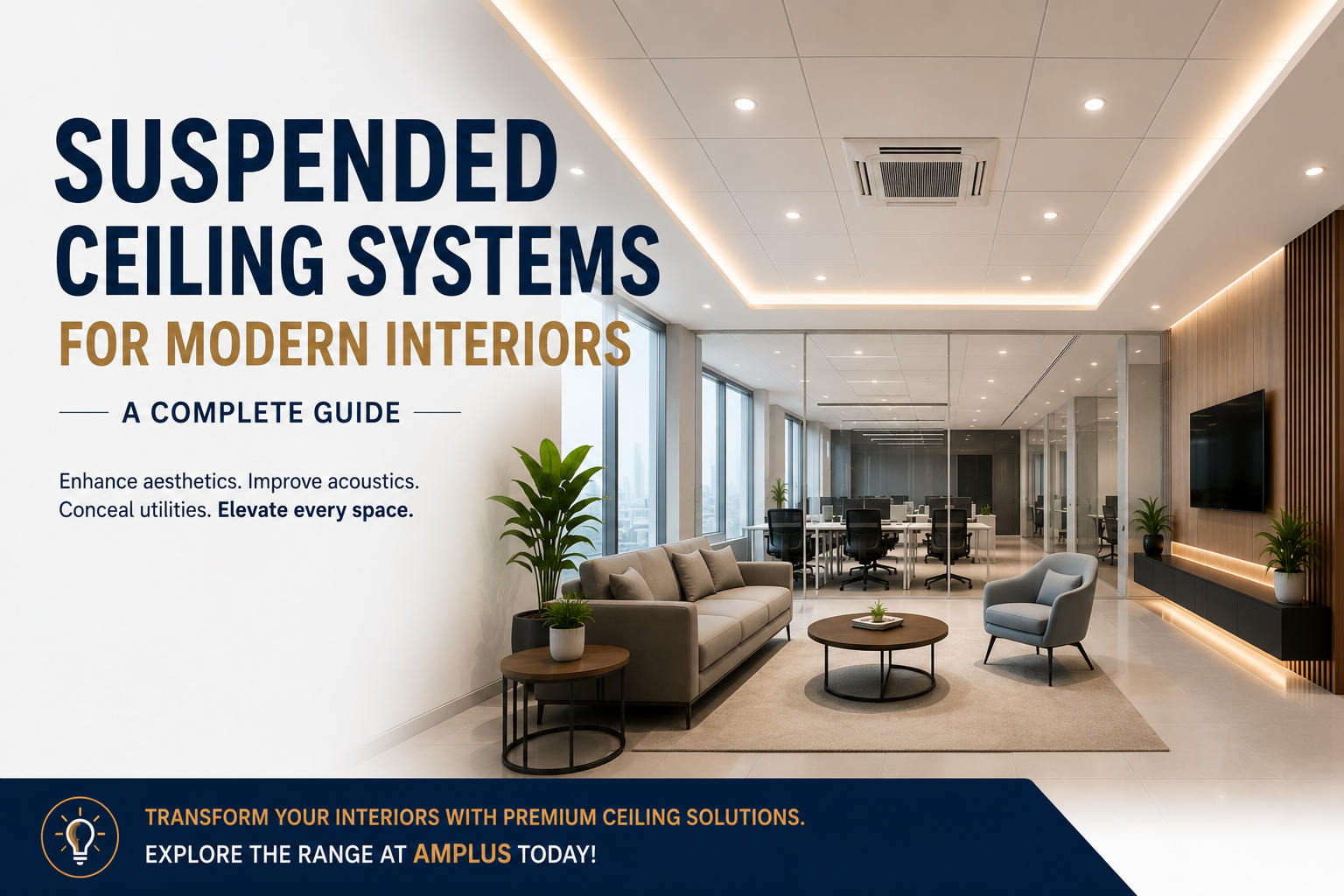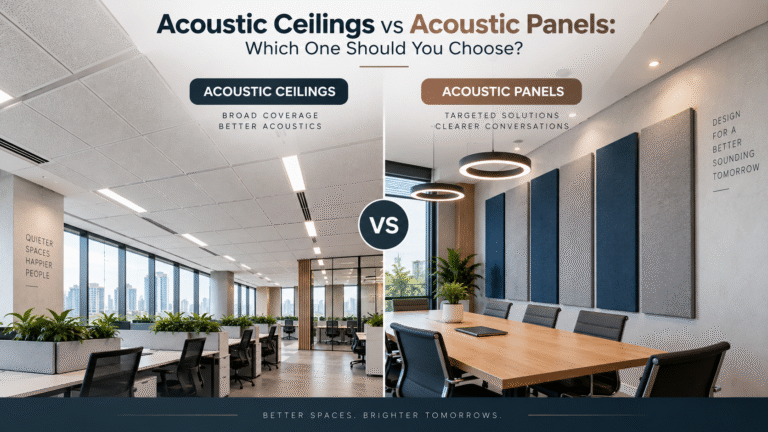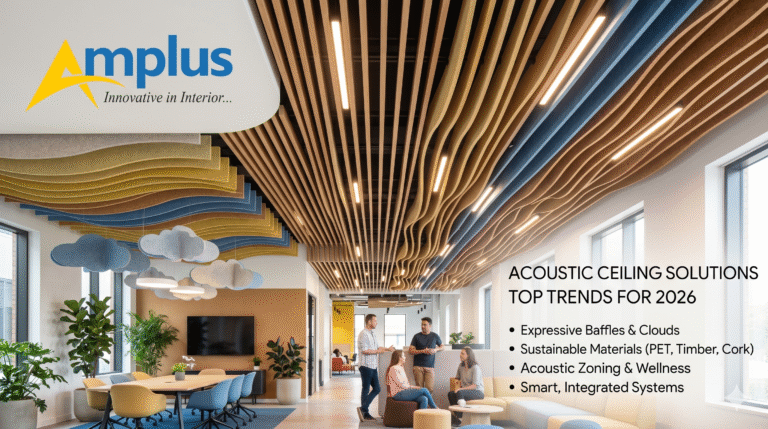
A good ceiling is just as important as any other part of a home. It should be strong and durable, but it also needs to match and enhance the overall look of the space. Since traditional ceilings offer limited design options, many people today are choosing false ceilings to improve the appearance of their homes.
When selecting the right false ceiling design for your home or commercial space, it is important to consider not just the look but also performance factors like thermal efficiency and fire resistance. A ceiling today is not just a structural element, it should be both visually appealing and safe. This is why false ceilings have become a preferred choice for homeowners and businesses, offering both beauty and functional benefits.
Proper research is essential before installing a ceiling. Homeowners and contractors should understand different types of false ceilings, their properties, advantages and limitations before making a decision.Read further to know a little more about the best false ceilings designs and the pros and cons of false ceiling installation.
What is a False Ceiling?
A false ceiling is also called a dropped ceiling. It is a secondary ceiling installed below the main ceiling of a room. It is supported by wooden or metal frames and can be made using materials like gypsum, plaster of Paris (PoP), wood and more. These materials are flexible and can be shaped into different designs and patterns based on personal preferences.
Since most false ceiling materials are lightweight, they are easier to install. They also create less dust during installation compared to traditional ceiling construction, making the process cleaner.
Contractors often recommend gypsum or PoP false ceilings because of their multiple benefits beyond aesthetics. False ceilings provide a smooth finish, help reduce electricity usage and lower room temperature. Additionally, gypsum ceilings with protective coatings can offer fire resistance and waterproofing, improving safety and durability.
What are The Different Types of False Ceiling Materials?
Here are the differenct types of false ceiling materials, each offering different benefits in terms of appearance, durability, maintenance, and cost:
Gypsum False Ceilings
Gypsum ceiling boards are one of the most popular materials used for false ceilings. They are lightweight, visually appealing, and offer resistance to fire, moisture and sound. They are also environmentally friendly, making them a preferred choice for modern interiors.
Plaster of Paris (PoP) False Ceilings
PoP is another commonly used material, known for its smooth finish and flexibility. It can be easily molded into various shapes and designs. PoP ceilings provide good insulation and are durable even in changing weather conditions.
Wooden False Ceilings
Wooden ceilings are valued for their natural texture and classic appearance. They also offer good sound absorption and help in energy efficiency. However, they are more expensive and are typically used in residential spaces rather than commercial projects.
Installation Process of False Ceiling
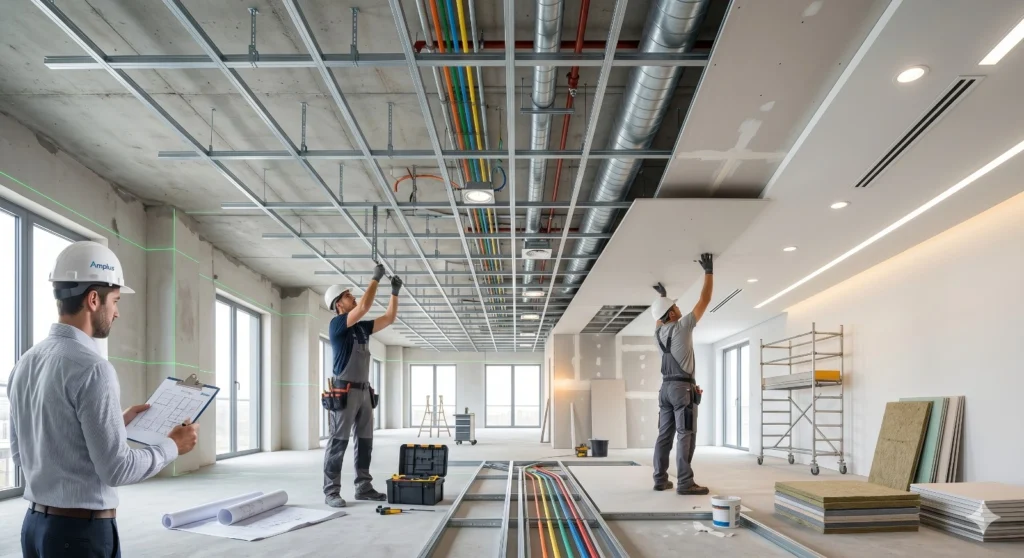
Installing a false ceiling requires proper planning and skilled execution to achieve the best results. The general process includes:
STEP 1. Site Measurement and Planning: The area is measured and the ceiling design is finalized based on space, lighting and functional requirements.
STEP 2. Frame Installation: A metal or wooden framework is fixed to the main ceiling using rods or hangers. This structure acts as the base support for the false ceiling.
STEP 3. Board Fixing: Ceiling materials like gypsum boards or PoP panels are installed onto the frame. Proper alignment is ensured to achieve a smooth and level surface.
STEP 4. Electrical and Lighting Setup: Wiring for lights, fans and other fixtures is done within the ceiling space before final finishing.
STEP 5. Finishing and Joint Treatment: Joints are sealed, surfaces are smoothed and finishing materials are applied to achieve a clean and seamless look.
STEP 6. Painting and Final Touches: The ceiling is painted or finished as per design and lighting fixtures are installed to complete the setup.
Advantages of False Ceilings
- Allows you to design your ceiling exactly the way you want.
- Provides a clean, neat and uniform finish.
- Hides wires, pipes and structural elements.
- Helps reduce indoor temperature due to the gap between ceilings.
- Lowers electricity costs with energy-efficient LED lighting.
- Offers fire-resistant and waterproof options for long-term durability.
Disadvantages of False Ceilings
- Requires expert design, planning and installation.
- Not suitable for spaces with low ceiling height, as it reduces vertical space.
- Needs careful material selection for long-term performance.
A well-designed false ceiling, especially when made from durable materials like gypsum or PoP can last up to 20 years under normal conditions. It is a preferred choice in commercial spaces as it enhances the overall appearance and creates a professional impression for visitors. Fire-resistant and thermally efficient materials also improve comfort and safety for employees.
For homeowners, false ceilings offer a clean and dust-free installation along with a modern and attractive finish. They can completely transform a space into your desired style; whether elegant, bold, or creative. A well-chosen false ceiling not only enhances the look of your space but also adds comfort, efficiency and long-term value.