When designing or renovating an interior, overhead surfaces often become an afterthought, overshadowed by flooring and wall treatments. However, choosing the right ceiling solution for your space is a critical decision that influences much more than appearance. The right ceiling dictates acoustic balance, optimizes lighting, supports long-term durability, and manages environmental challenges. Whether for a bustling office, a modern commercial building, or a residential interior, understanding how to navigate the available options ensures you select the ideal system for your specific requirements.
What Should You Consider Before Choosing a Ceiling?
Before finalizing materials, evaluating your specific functional requirements will ensure long-term satisfaction and architectural harmony.
Purpose of the Space
A ceiling’s function must directly align with the room’s primary use. In residential living rooms, aesthetics and lighting take priority, often leaning toward seamless finishes. Commercial offices require robust acoustic control and straightforward access to overhead infrastructure, making the right commercial interior solutions important for creating functional and comfortable workspaces. Healthcare facilities and commercial kitchens demand specialized ceilings that prioritize hygiene, fire safety, and ambient noise reduction while complementing the interior design.
Ceiling Height
The available vertical clearance significantly impacts your options. High ceilings in commercial spaces benefit immensely from suspended grid or baffle systems, improving air circulation and absorbing excess sound. In rooms with lower clearance, slim-profile ceiling solutions are recommended. They help maintain visual proportions and enhance spatial perception without making the area feel confined, restrictive, or disproportionately small.
Moisture and Environmental Conditions
Moisture exposure is a fundamental consideration, especially given India’s diverse climate zones. Bathrooms, commercial kitchens, and coastal properties require humidity-resistant materials. Choosing standard dry-area materials for humid environments frequently leads to sagging, structural degradation, or mold growth. Selecting appropriate PVC laminated gypsum ceilings system ensures the ceiling remains stable and visually appealing despite challenging atmospheric conditions.
Acoustics
Uncontrolled noise disrupts productivity and comfort. In corporate offices, meeting rooms, educational institutions, and hospitality venues, superior acoustic performance is paramount. Utilizing appropriate ceiling systems, such as mineral fiber panels or perforated metal tiles equipped with acoustic fleece backing, helps manage sound reflection and reduces ambient reverberation. This targeted approach fosters a quieter, more focused environment.
Lighting and Building Services
Modern ceilings serve as vital infrastructure hubs. Your selection directly affects the seamless integration of recessed lighting fixtures, HVAC ducts, electrical wiring, and crucial life-safety systems like smoke detectors and sprinklers. Selecting a modular or easily accessible suspended system greatly simplifies the initial integration and subsequent servicing of these essential utilities, preventing disruptive maintenance down the line.
Maintenance and Accessibility
Regular upkeep must be carefully factored into your initial decision. Consider how efficiently ceiling panels can be cleaned, repaired, or replaced. In commercial and industrial spaces, maintenance personnel require frequent, unhindered access to concealed services above the ceiling. Modular systems offer superior accessibility compared to monolithic plasterboard, minimizing long-term operational disruptions and reducing repair timelines.
Budget and Long-Term Value
Evaluating your budget goes far beyond assessing the initial installation cost. A comprehensive approach considers material durability, ongoing maintenance expenses, and overall lifecycle value. Investing in a resilient, moisture-resistant, or acoustically superior ceiling may carry a higher upfront price but ultimately reduces replacement costs, lowering the total cost of ownership over the building’s lifespan.
Types of Ceiling Solutions
Understanding the primary systems available helps narrow down your functional choices:
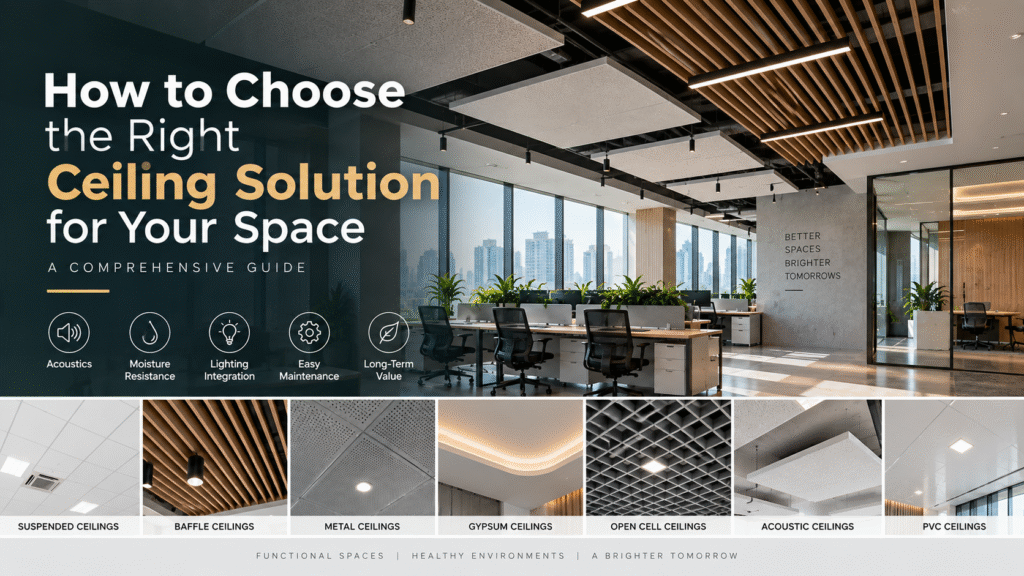
- Gypsum Ceilings: Gypsum ceilings solution is highly versatile and popular across residential and commercial sectors, offering a smooth, monolithic finish ideal for intricate architectural designs and seamless lighting integration.
- Metal Ceilings: Metal ceilings are recognized for exceptional durability and sleek modern aesthetics, these systems excel in high-traffic commercial environments, providing strong resistance to wear.
- Suspended/Grid Ceilings: Suspended ceiling is standard for modern offices and retail spaces, utilizing modular tiles to deliver outstanding acoustic control and utility access.
- PVC Laminated Ceilings: PVC laminated ceiling is suitable for moisture-prone or high-humidity areas, offering effortless cleaning and robust defense against environmental deterioration.
Quick Decision Guide
| Space Requirement | Key Considerations | Ideal System Recommendation |
| Living Room | Aesthetics, seamless finish | Gypsum ceilings |
| Office Workspace | Acoustic control, utility access | Suspended grid systems |
| Bathroom/Kitchen | Moisture resistance, easy cleaning | PVC laminated tiles |
| High-Traffic Retail | Durability, maintenance, airflow | Metal or baffle ceilings |
| Healthcare Facility | Hygiene, acoustics, fire safety | Specialized mineral fiber |
How Amplus Helps You Choose the Right Ceiling Solution?
Selecting the optimal ceiling involves a structured, logical approach. Begin by clearly identifying the primary purpose of the space and assessing environmental challenges, such as humidity. Next, evaluate the existing ceiling height and define specific acoustic goals. Plan for lighting and concealed building services early in the design phase. Finally, balance your immediate installation budget against projected long-term maintenance requirements. Always consult a qualified architectural professional to verify technical specifications.
As a leading ceiling manufacturer in India, Amplus provides innovative, high-quality architectural solutions tailored to diverse project requirements. From durable metal ceiling tiles and moisture-resistant PVC laminated gypsum to advanced acoustic panels, our products are engineered for commercial and residential excellence. We assist architects, builders, and facility managers in discovering reliable interior solutions that balance functional performance with exceptional design.
Conclusion
Ultimately, choosing the right ceiling solution for your space requires balancing aesthetic vision with practical necessity. By carefully evaluating room function, acoustic needs, environmental factors, and long-term maintenance requirements, you can select a system that significantly enhances your interior environment. Make a thoroughly informed choice to ensure lasting value, functional efficiency, and architectural comfort.
Frequently Asked Questions
How do I choose the right ceiling for my space?
To choose the right ceiling, assess the primary function of the room, consider ceiling height, evaluate moisture levels, define your acoustic needs, and budget for long-term maintenance rather than just the initial installation cost.
What factors should I consider when selecting a ceiling?
Key factors include the purpose of the space, available clearance, environmental conditions like humidity, acoustic performance, integration of lighting and building services, and material durability.
Which ceiling is suitable for moisture-prone areas?
For high-humidity environments like bathrooms and commercial kitchens, moisture-resistant options such as PVC laminated gypsum tiles or specialized metal ceilings are highly recommended to prevent sagging and mold.
What ceiling is suitable for offices and commercial spaces?
Suspended or grid ceilings utilizing mineral fiber or acoustic metal tiles are ideal for offices. They provide excellent sound absorption and allow easy maintenance access to overhead HVAC and electrical systems.
How do ceiling materials affect maintenance and durability?
Materials like metal and PVC are highly durable and easy to clean, making them cost-effective over time. Modular grid systems also allow individual panels to be replaced if damaged, whereas monolithic ceilings might require extensive repairs.