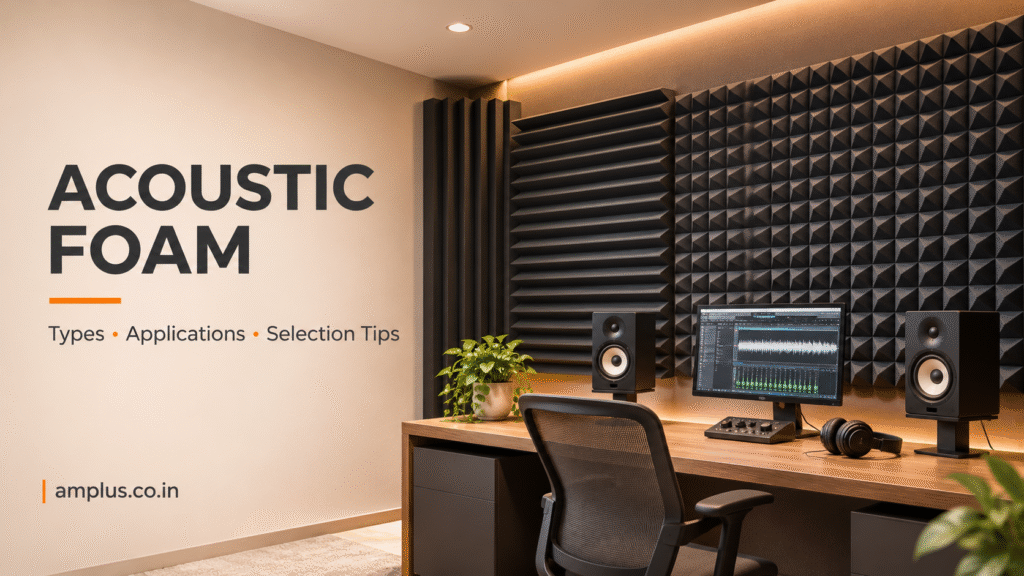
Acoustic foam is a specialized, lightweight open-cell porous material engineered specifically to manage sound reflections within interior spaces. Unlike dense, rigid building materials that reflect sound waves, open-cell foam features an interconnected network of pores that capture airborne acoustic energy.
The primary materials used in manufacturing acoustic foam include polyurethane (PU) foam and melamine foam. When sound waves strike the foam surface, they penetrate the open cells. As the sound wave travels through the tortuous pathways of the porous structure, particle velocity creates viscous and thermal friction. This friction converts a significant portion of the acoustic wave’s kinetic energy into thermal energy, effectively dissipating it rather than reflecting it back into the room.
It is vital to distinguish between sound absorption and sound reflection. Hard surfaces like concrete, glass, and tile reflect most incident sound energy, causing echoes and prolonged reverberation. Acoustic foam absorbs this incident energy, thereby reducing flutter echoes and shortening reverberation times.
Crucially, acoustic foam is not soundproofing. While it refines the acoustic environment inside a room by controlling reflections, its porous, lightweight structure lacks the mass and decoupling required to block sound transmission between rooms.
Different Types of Acoustic Foam
Acoustic foam is available in various profiles and formulations designed to address specific aesthetic and acoustic requirements. For larger commercial spaces, perforated acoustic panels offer another approach to sound absorption through specially designed panels and acoustic backing.
- Wedge Acoustic Foam: Features triangular parallel grooves that increase surface area, improving mid-to-high frequency absorption in recording studios.
- Pyramid Acoustic Foam: Consists of three-dimensional pyramid peaks that scatter and absorb sound waves across multiple angles, balancing absorption and diffusion.
- Egg-Crate Acoustic Foam: A classic contoured profile offering reliable broadband absorption at an economical price point.
- Flat Acoustic Foam Panels: Smooth-surfaced panels often wrapped in acoustic fabric, providing a sleek, modern architectural finish suitable for corporate spaces.
- Bass Traps and Corner Foam Products: Thick, specialized low-frequency absorbers installed in room corners where bass energy accumulates.
- Melamine Acoustic Foam: A thermoset resin foam known for superior fire-retardant properties and durability, frequently specified for commercial and industrial projects.
Performance depends on material composition, thickness, density, and mounting method—not merely on surface shape.
Common Applications of Acoustic Foam
Architects and interior designers specify acoustic foam across diverse environments to enhance acoustic comfort:
Recording Studios and Home Studios
In music production, controlling primary reflections is essential. Acoustic foam minimizes flutter echoes and standing waves, ensuring accurate acoustic monitoring and cleaner vocal and instrument tracking.
Corporate Offices and Meeting Rooms
Open-plan offices suffer from speech distraction and excessive noise. Strategically placed acoustic foam panels reduce ambient chatter, improving speech intelligibility in meeting rooms and collaborative spaces. Explore how PET acoustic panels help manage reverberation and create more comfortable, productive office environments.
Educational and Training Spaces
Classrooms require low reverberation for clear communication. Acoustic treatment helps students understand speech easily by minimizing echo buildup in lecture halls and training rooms.
Home Theatres and Entertainment Rooms
Acoustic foam enhances cinematic audio clarity by preventing sound waves from bouncing aggressively off bare walls, delivering a more immersive surround-sound experience.
Commercial and Hospitality Interiors
Restaurants, lobbies, and hospitality venues utilize aesthetic acoustic panels to control crowd noise, creating a comfortable acoustic ambiance without compromising interior design aesthetics.
Benefits and Limitations of Acoustic Foam
Acoustic Foam Benefits
- Reflection Control: Effectively reduces unwanted echoes and standing waves.
- Reverberation Management: Lowers RT60 decay times for improved clarity.
- Lightweight & Versatile: Easy to install on walls and ceilings using approved adhesives or mounting hardware.
- Design Flexibility: Available in diverse thicknesses, colors, and architectural profiles.
Besides foam-based solutions, acoustic wall tiles offer additional design flexibility and sound absorption for modern commercial interiors.
Acoustic Foam Limitations
- Not Soundproofing: Does not stop airborne noise transmission through walls or ceilings.
- Low-Frequency Constraints: Standard thin panels have limited absorption capacity below 250 Hz.
- Environmental Sensitivity: Unprotected polyurethane foam can oxidize and discolor under direct UV light, and standard grades require fire-retardant treatments to meet safety codes.
How to Choose the Right Acoustic Foam?
- Understand Your Acoustic Requirements: Identify whether your issue is flutter echo, excessive reverberation, or low-frequency rumble.
- Consider Thickness and Density: Thicker panels (e.g., 50mm to 100mm) provide superior low-mid frequency absorption compared to thin sheets.
- Select Appropriate Coverage: Determine room surface area coverage based on volume and reverberation targets (typically 20% to 35% wall coverage for general rooms).
- Check Fire Safety and Quality: Ensure products comply with relevant fire safety standards and are manufactured from high-grade, resilient materials.
- Evaluate Placement: Target first reflection points, rear walls, and corners for optimal acoustic impact.
Acoustic Foam vs Soundproofing: Understanding the Difference
Many buyers confuse between acoustic treatment vs soundproofing. The table below outlines key differences:
| Feature | Acoustic Foam (Absorption) | Soundproofing (Isolation) |
| Primary Function | Absorbs internal sound reflections | Blocks sound transmission between spaces |
| Key Mechanism | Porous open cells convert sound to heat | Mass, decoupling, airtightness, damping |
| Main Benefit | Reduces echo and improves speech clarity | Prevents noise leakage into or out of a room |
| Typical Materials | Polyurethane foam, melamine foam | Mass-loaded vinyl, resilient channels, drywall |
Conclusion: Choosing Acoustic Foam for Better Interior Acoustics
Acoustic foam is a versatile, highly effective solution for managing internal room acoustics, enhancing clarity, and reducing reverberation. By understanding material properties, thicknesses, and application-specific requirements, designers can achieve optimal acoustic balance. To explore professional interior and acoustic ceiling solutions tailored to your project, visit Amplus.
Frequently Asked Questions (FAQs)
What is acoustic foam used for?
Acoustic foam is primarily used to control sound reflections, reduce flutter echoes, and decrease reverberation time inside a room, improving overall speech clarity and listening environments.
Does acoustic foam make a room soundproof?
No. Acoustic foam is an absorbent material designed for internal room acoustics. It lacks the mass, density, and decoupling required to stop sound from entering or leaving a room.
Which type of acoustic foam is best?
The “best” foam depends on your specific acoustic needs. Wedge and pyramid foams excel at mid-to-high frequency absorption in studios, while thick bass traps are necessary for low frequencies in corners.
Does thicker acoustic foam absorb more sound?
Generally, yes. Thicker foam panels (such as 50mm to 100mm) extend absorption capabilities to lower frequencies compared to thin foam sheets, which primarily affect high frequencies.
Where should acoustic foam be installed?
Acoustic foam should be installed at first reflection points on side walls, behind monitor speakers, on rear walls to combat flutter echoes, and in room corners for bass management.