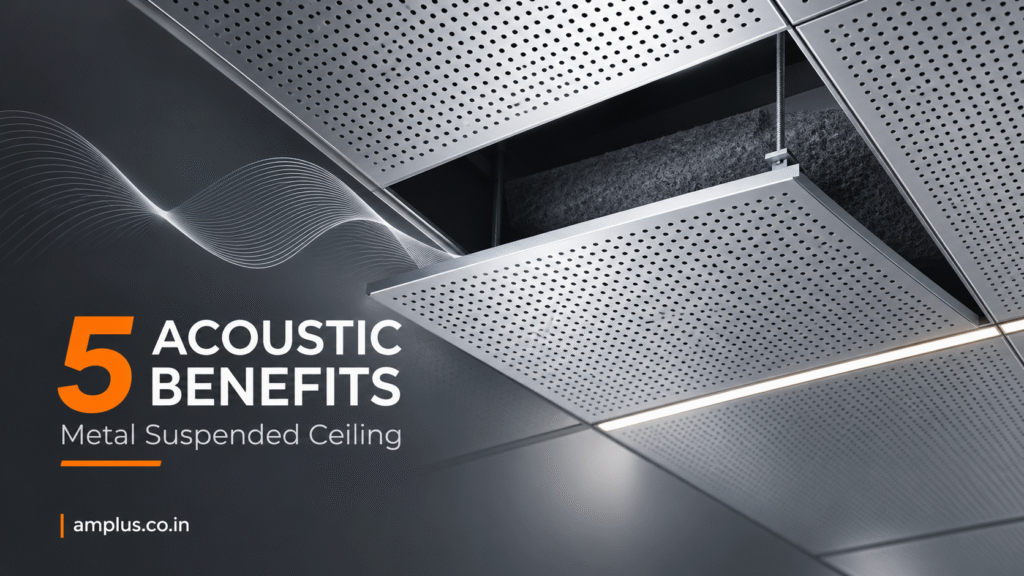
Metal suspended ceilings are a foundational element in modern commercial, corporate, and institutional architecture. Comprising lightweight, durable panels—typically fabricated from Aluminium or galvanized steel—suspended from a structural sub-grid or carrier system, these ceilings offer an exceptional balance of structural longevity, fire safety, and aesthetic versatility.
However, standard solid metal panels are inherently sound-reflective. To achieve acoustic control, manufacturers engineer panels with precision perforation patterns backed by sound-absorptive non-woven acoustic fleece or mineral wool insulation. When sound waves strike a perforated metal ceiling, energy passes through the apertures into the absorptive backing, converting acoustic energy into thermal energy. Consequently, the acoustic performance of a metal ceiling depends entirely on the complete ceiling assembly—including perforation percentage, backing material, and plenum depth—rather than the metal itself.
5 Key Acoustic Benefits of Metal Suspended Ceilings
Improved Sound Absorption
Perforated metal ceiling panels paired with high-performance acoustic fleece or mineral wool backing deliver exceptional sound absorption coefficients NRC ratings. By allowing sound waves to enter the absorptive cavity rather than bouncing back into the room, these systems significantly lower reflected sound energy, creating a balanced and controlled indoor soundscape.
Reduced Echo and Reverberation
Large open-plan offices, boardrooms, and atriums frequently suffer from excessive reverberation time, causing speech to blur and ambient noise to amplify. Installing an engineered acoustic metal ceiling helps shorten reverberation times by capturing stray sound waves. While it does not eliminate echo entirely, it transforms a harsh, echoing environment into a comfortable space.
Better Speech Intelligibility and Listening Comfort
In commercial meeting rooms, corporate lecture halls, and shared workspaces, clarity of communication is paramount. By suppressing disruptive reflections, metal suspended ceilings enhance speech transmission indices (STI). This ensures occupants can communicate clearly without raising their voices, boosting productivity in corporate and educational environments.
Flexible Acoustic Design and Performance
Modern metal ceiling systems offer diverse architectural customization. Designers can select from micro-perforations, regular hole patterns, or slotted designs matched with varying thicknesses of acoustic backing. This allows architects to fine-grained tune sound absorption across specific frequency bands while maintaining a sleek, monolithic, or linear visual aesthetic.
Support for Better Acoustic Planning Across Large Spaces
Suspended metal ceilings serve as a primary pillar in holistic acoustic design. When integrated alongside wall acoustic panels, high-performance flooring, and acoustic partitions, metal ceilings contribute to a comprehensive noise-mitigation strategy. Effective acoustic planning requires evaluating the entire room volume, ensuring the ceiling works in synergy with other architectural surfaces.
Factors That Influence the Acoustic Performance of Metal Ceilings
Achieving optimal acoustic results requires evaluating several interdependent technical parameters:
- Perforation Design: Hole diameter, pattern geometry, and open area percentage dictate how freely sound waves enter the backing medium.
- Acoustic Backing: The density and thickness of the acoustic fleece or mineral wool insulation directly govern mid-to-high frequency absorption.
- Ceiling Cavity (Plenum): The vertical distance between the suspended ceiling and the structural slab acts as an acoustic chamber, influencing low-frequency bass absorption.
- Panel Coverage: The proportion of the total ceiling area treated with perforated acoustic panels determines overall room reverberation reduction.
- Installation Quality: Precise grid alignment and secure edge sealing prevent acoustic leakage around perimeter trims.
- Frequency Response: Sound absorption varies across frequencies; reviewing octave-band test data is essential for specialized spaces.
Where Are Metal Acoustic Ceilings Commonly Used?
- Corporate Offices and Workspaces: Open-plan layouts benefit immensely from sound-absorbing metal ceilings, which mitigate conversational distraction and establish zones of acoustic privacy in meeting and huddle rooms.
- Educational Institutions: Classrooms demand low background noise and high speech clarity. Metal acoustic ceilings help students hear educators clearly, supporting better concentration and learning outcomes.
- Healthcare and Institutional Buildings: In hospitals and clinics, where noise pollution increases patient stress, durable metal ceilings combine acoustic comfort with hygiene, cleanability, and moisture resistance. (Note: Specific healthcare zones require antimicrobial and washable finishes.)
- Hospitality and Commercial Interiors: Hotels, airports, and retail lobbies utilize metal acoustic ceiling systems to tame high foot-traffic ambient noise while projecting a prestigious, contemporary aesthetic.
How to Choose the Right Metal Suspended Ceiling for Acoustic Requirements?
Selecting the ideal metal ceiling system involves a structured evaluation:
- Diagnose Acoustic Challenges: Identify whether the primary issue is excessive reverberation, lack of speech privacy, or high ambient noise.
- Review Tested Data: Request independent laboratory acoustic test reports confirming Sound Absorption Average (SAA) and Noise Reduction Coefficient (NRC) ratings.
- Analyze Frequency Ratings: Understand that NRC is a general summary metric; examine full frequency band performance for demanding environments.
- Evaluate Backing & Perforations: Match perforation geometry and fleece thickness to your specific acoustic target.
- Assess Environmental Factors: Verify fire ratings, humidity resistance, maintenance protocols, and structural durability.
Conclusion: Combining Acoustic Performance with Modern Ceiling Design
Metal suspended ceilings offer a sophisticated fusion of engineering durability and acoustic refinement. By combining precision-perforated panels with suitable absorptive backings and well-designed plenums, architects can transform noisy environments into serene, highly functional spaces.
To explore premium, meticulously engineered interior and ceiling solutions tailored to your commercial projects, visit Amplus India.
Frequently Asked Questions (FAQs)
Q1: Are metal suspended ceilings effective for room acoustics?
Ans: Yes, when engineered with acoustic perforations and sound-absorbing backing materials like acoustic fleece or mineral wool, metal suspended ceilings provide high levels of sound absorption and reduce room reverberation.
Q2: Do solid metal ceiling panels absorb sound?
Ans: No. Solid, unperforated metal panels are acoustically reflective. Sound absorption requires perforations that allow sound waves to pass into an absorptive backing layer.
Q3: What is the difference between sound absorption and sound insulation?
Ans: Sound absorption reduces reflected sound energy within a room (controlling echo and reverberation). Sound insulation (or sound transmission class) prevents sound from passing between adjacent rooms or floors.
Q4: How does the ceiling cavity depth affect acoustic performance?
Ans: The plenum depth (the space between the metal ceiling and the structural slab) influences low-frequency sound absorption. Deeper cavities generally improve low-frequency performance, especially when combined with porous insulation.
Q5: Can metal acoustic ceilings be used in healthcare facilities? Ans: Yes, provided the system meets stringent hygiene, cleanability, and fire-safety standards. Many Aluminium and steel ceiling systems feature antimicrobial and washable coatings suitable for clinical environments.