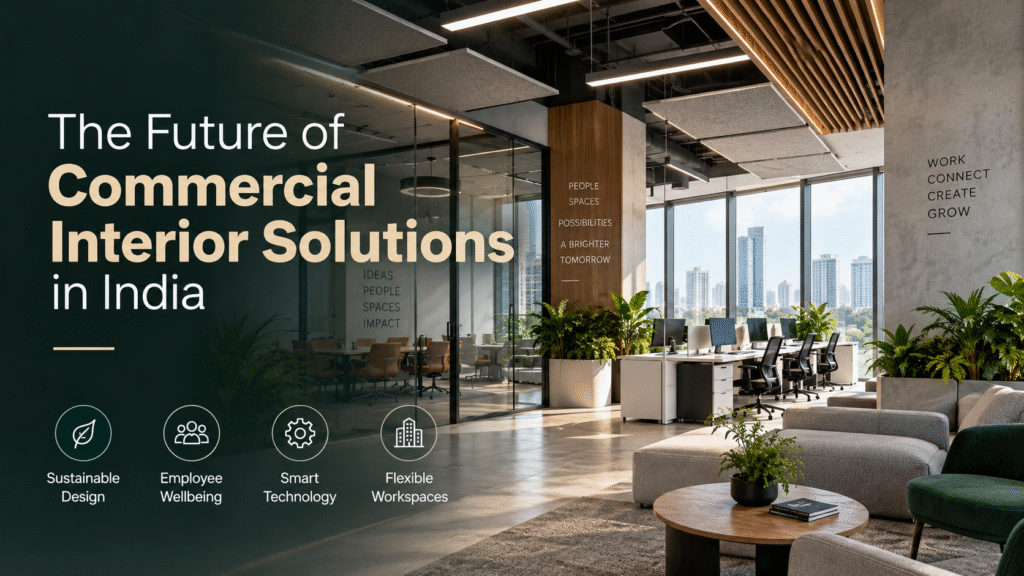
India’s commercial real estate sector is undergoing a fundamental transformation in 2026. The traditional office, once defined by rigid cubicles and static floor plans, has evolved into a dynamic ecosystem. Today, businesses are moving beyond basic aesthetics, demanding commercial spaces that seamlessly combine functionality, employee experience, integrated technology, and sustainability. As corporate hubs in cities like Bengaluru, Mumbai, and Delhi NCR expand, the future of commercial interior solutions in India is being shaped by the need for agility and human-centric design.
How Commercial Interiors in India are Changing?
The shift in commercial interior design is driven by changing work patterns and evolving corporate priorities. With hybrid work models firmly established, the physical office must now offer experiences that cannot be replicated remotely. Commercial spaces are transitioning from high-density workstations to collaborative hubs. Real estate developers and facility managers are increasingly prioritizing spatial efficiency, ensuring that every square foot delivers measurable value.
Furthermore, the Indian market is witnessing a strong push toward compliance with international green building standards, forcing a move away from resource-heavy construction toward smarter, leaner interior fit-outs that support long-term operational efficiency.
Key Trends Shaping the Future of Commercial Interiors
Several core developments are redefining modern workspaces and commercial environments across the subcontinent.
Flexible and Adaptable Workspaces
Static floor plans are becoming less suitable for modern workplaces. Modern commercial interiors prioritize flexibility, allowing spaces to pivot based on daily requirements. Activity-based working environments feature movable partitions, modular furniture, and multipurpose zones. A single area might serve as a collaborative brainstorming hub in the morning and a quiet focus zone in the afternoon. This adaptability helps Indian businesses scale operations efficiently without requiring frequent, disruptive renovations.
Technology-Integrated Interiors
Smart technology is becoming an increasingly important part of modern office design. Future-ready workspaces embed technology directly into the architectural framework. This includes smart lighting systems that adjust based on natural daylight, occupancy sensors that optimize HVAC usage, and integrated AV systems for seamless global communication. Workplace interior design now requires careful coordination between IT infrastructure and interior fit-outs to ensure connectivity is invisible yet universally accessible.
Sustainable Commercial Interiors
Environmental responsibility is a primary driver in commercial interior trends in India. Businesses are demanding responsible material selection, prioritizing low-VOC finishes, recycled content, and energy-efficient systems. Durable ceiling solutions and wall treatments that improve thermal insulation are becoming standard. By maximizing natural light and utilizing resource-efficient materials, companies can significantly reduce their carbon footprint while achieving certifications from organizations like the Indian Green Building Council (IGBC).
Employee-Centric Workplace Design
The war for talent in India’s corporate sector has elevated the importance of workplace wellbeing. Office interior solutions are now deeply focused on the end-user. Acoustic management is critical; businesses are investing heavily in sound-absorbing ceiling panels and strategic layouts to reduce noise fatigue in open-plan offices. Additionally, ergonomic furniture, biophilic design elements (bringing nature indoors), and optimal indoor air quality are essential for maintaining employee comfort, health, and productivity.
Modular and Future-Ready Interior Systems
To minimize future capital expenditure, modern commercial interiors rely heavily on modular systems. Exposed ceiling grids, demountable walls, and raised access floors allow facility managers to upgrade technological infrastructure or reconfigure layouts with minimal downtime. These modular interior solutions ensure that the commercial space can evolve alongside the business, extending the lifecycle of the interior fit-out.
What Businesses Should Consider When Planning Future-Ready Interiors
When investing in corporate interior design, business owners and property managers must evaluate several critical factors to ensure long-term viability:
- Acoustics and Lighting: Poor acoustics and inadequate lighting severely impact productivity. Invest in high-quality acoustic ceiling solutions and automated lighting controls.
- Lifecycle Cost vs. Initial Budget: Look beyond upfront expenses. Durable materials and modular systems may have higher initial costs but drastically reduce maintenance and renovation expenses over a 10-year cycle.
- Scalability: Ensure that the chosen commercial interior solutions can accommodate shifting headcount and technological upgrades without requiring structural changes.
- Brand Identity: The physical space should physically manifest the company’s culture and values, creating a cohesive brand experience for visiting clients and daily users.
How Amplus Supports Future-Ready Commercial Interiors?
Navigating these evolving trends requires expertise and precision. Amplus understands the unique demands of the Indian commercial sector. By offering advanced ceiling systems and comprehensive commercial interior solutions, Amplus helps architects and facility managers build spaces that balance aesthetic appeal with rigorous functional requirements.
Whether addressing complex acoustic challenges or implementing sustainable, modular designs, the focus remains on delivering reliable, high-performance environments tailored to modern business operations.
Conclusion
The future of commercial interior solutions in India is decisively moving toward environments that are flexible, sustainable, and deeply integrated with technology. As organizations continue to redefine the purpose of the physical workspace in 2026, the demand for adaptable, comfortable, and future-ready interiors will only accelerate. For businesses planning new offices or renovating existing commercial spaces, choosing flexible, sustainable and scalable interior systems can help create workplaces that remain functional as business needs evolve.
Frequently Asked Questions (FAQs)
What is the future of commercial interior design in India?
The future of commercial interior design in India focuses on creating flexible, technology-integrated, and sustainable spaces. Modern offices are evolving into collaborative hubs that prioritize employee wellbeing, acoustic comfort, and modular layouts over rigid, traditional floor plans.
What trends are shaping commercial interiors in India?
Key trends include activity-based flexible workspaces, smart office automation, sustainable material selection, biophilic design, and modular interior systems like demountable walls and acoustic ceilings that allow for easy reconfigurations.
How is technology changing commercial interior spaces?
Technology is being seamlessly integrated into interior architecture through smart lighting, IoT-enabled climate control, automated workspace management systems, and advanced AV infrastructure, making commercial spaces more energy-efficient and user-friendly.
Why is sustainability important in commercial interiors?
Sustainability reduces operational costs, improves energy efficiency, and ensures compliance with environmental standards like IGBC. Using recycled materials, maximizing natural light, and implementing low-VOC finishes also significantly improve indoor environmental quality.
What should businesses consider when designing future-ready workspaces?
Businesses should prioritize long-term lifecycle costs over initial budgets, invest in acoustic management, ensure technological scalability, choose durable modular materials, and design spaces that reflect their brand identity while supporting employee comfort.