For most of the last few decades, the acoustic ceiling had one job and one personality: be a flat grid of grey-white tiles, do its quiet work absorbing office chatter, and otherwise stay out of sight. Nobody designed a room around the ceiling. It was infrastructure, like the wiring above it.
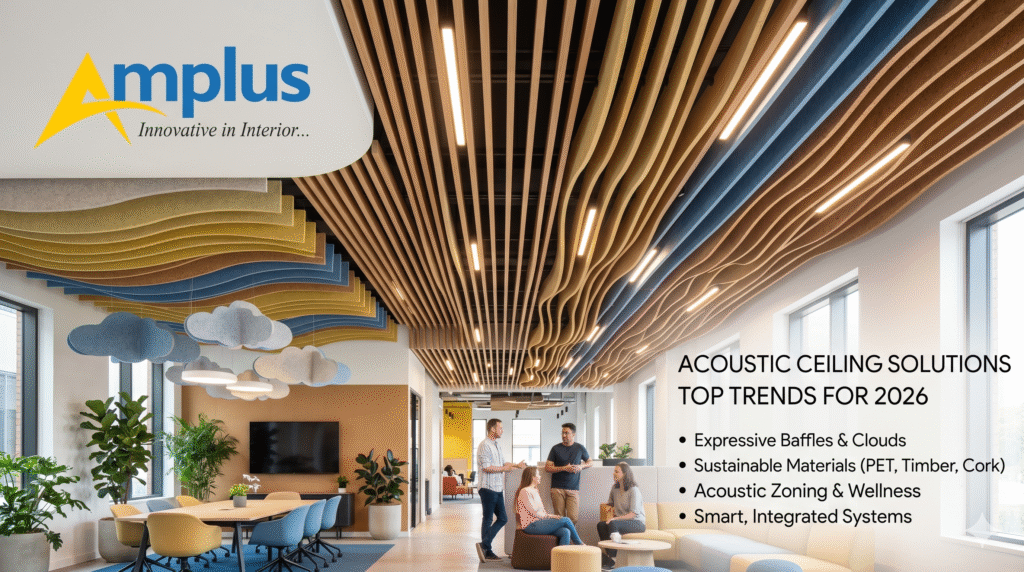
That has changed, and 2026 is the year it’s impossible to ignore. Walk into a well-designed office, restaurant, or studio today and the ceiling is often the most striking thing in the room — sculptural baffles hanging in rhythm, warm timber slats running overhead, felt clouds floating above a meeting zone. The acoustics are still doing their job. They’re just no longer hiding while they do it.
This shift matters for anyone planning a space, because the choices now go well beyond “which tile blocks the most noise.” Acoustic ceiling solutions in 2026 are about how a space looks, how sustainable it is, how it adapts to changing use, and how it makes people feel. Here’s an honest look at the trends actually shaping the field this year — what’s worth your attention, and what to be cautious about.
Why the Ceiling Became the Star of Acoustic Design?
The single biggest change is philosophical: acoustics moved from the background to the foreground. Designers now treat sound as a core design layer, sitting alongside lighting, air quality, and ergonomics, rather than a problem to be patched up afterward.
There’s solid reasoning behind it. Poor acoustics aren’t just annoying — they raise stress, sap concentration, and cause listener fatigue, particularly in workplaces, schools, and hospitality spaces. Once you accept that sound shapes how a room feels as much as how it looks, it stops making sense to bury the treatment behind a bland tile. The ceiling, being the largest uninterrupted surface in most rooms, is the natural canvas for doing this well.
The Biggest Acoustic Ceiling Trends Shaping 2026
Acoustics as a Visible Design Feature
The defining trend of the year. Baffles, rafts, and clouds are being used as deliberate visual elements — creating rhythm, defining zones, and adding texture overhead. Instead of a continuous flat plane, you’ll see suspended fins arranged in waves, floating islands above specific areas, and organic, sculptural forms that look like art and happen to absorb sound. It’s a genuinely better approach in many spaces, because partial, well-placed treatment can perform as well as full coverage while looking far more intentional.
Sustainable and Recycled Materials
Sustainability has gone from a nice-to-have to a specification requirement. On green-rated projects in particular, specifiers are increasingly asking for panels made from recycled or low-embodied-carbon materials. The standout product here is PET felt — acoustic panels and baffles made largely from recycled plastic bottles. It’s lightweight, comes in dozens of colors, cuts cleanly into custom shapes, and performs well. Alongside it you’ll see cork, bamboo, reclaimed wood, and recycled metal tiles, all chosen for both their environmental story and their genuine acoustic value.
A word of caution, though: “eco” is also a marketing word. Ask for the recycled content percentage and any real certification rather than taking a green label at face value.
Wood Slat and Natural-Texture Ceilings
Timber and timber-look acoustic slat systems are having a strong moment. Backed with absorptive material and an air gap, slatted ceilings deliver real sound control while bringing warmth and a biophilic, natural feel that cold tiles never could. They suit everything from a living room to a boardroom, which is a big part of their appeal. They do need correct backing to actually perform acoustically — the slats alone are mostly decorative — so the build-up behind them matters as much as the wood you see.
Acoustic Zoning for Hybrid Spaces
Hybrid working reshaped how offices are used, and ceilings have adapted. Rather than treating a whole floor uniformly, designers now create acoustic zones within a single open space — a quieter, more absorptive treatment over focus areas, livelier zones for collaboration, and clear cues that tell people how a space is meant to be used. The ceiling becomes a tool for organizing behavior, not just dampening noise.
Integrated Lighting and Services
Ceilings are increasingly designed as a single integrated system rather than separate trades fighting for the same plane. Lighting is built into baffles and rafts — recessed LED, soft cove lighting, even fibre-optic starfield effects in home theatres — and acoustic systems are coordinated with HVAC, sprinklers, and AV from the start. The result is cleaner, more deliberate, and avoids the cluttered afterthought look of services bolted on later.
Smart and Adaptive Acoustics
Still emerging, but real: systems that respond to changing conditions, and tighter integration of sensors and technology into the ceiling plane. In practice today this mostly means smart lighting and AV woven into acoustic systems, with genuinely adaptive sound control sitting at the higher, more specialized end of the market. Worth watching, but treat the most futuristic claims with healthy scepticism for now.
Wellbeing-Driven Design
Tying it all together is a focus on human wellbeing. Acoustic choices are increasingly justified by their effect on calm, focus, and comfort rather than productivity metrics alone. This is a welcome shift, and it’s why even residential clients — not just commercial ones — are now asking for proper acoustic ceilings in living rooms and home offices.
How These Trends Play Out Across Different Spaces?
The trends look different depending on where you apply them.
Residential Homes
Homeowners are embracing wood slat ceilings and discreet felt clouds in living rooms, open-plan kitchens, and home offices — warmth and quiet in one move. The driver is usually open-plan living, where hard surfaces and large volumes create echo that makes a beautiful home feel noisy and tiring.
Commercial Offices
Offices are where acoustic zoning and expressive baffles shine. Suspended rafts over collaboration areas, absorptive treatment over focus zones, and sustainable materials to satisfy green building targets — all while making the workplace look considered and modern. This is the most active segment for acoustic innovation right now.
Educational Institutions
Schools and universities prioritize speech clarity and durability. Acoustic ceilings tuned to keep reverberation low help students hear and concentrate, while robust, low-maintenance systems stand up to heavy use. Wellbeing and learning outcomes are increasingly part of the brief.
Auditoriums
Auditoriums remain bespoke, engineered environments where the ceiling balances absorption and reflection across a large volume for an audience. The 2026 influence shows up in more sculptural, integrated forms — but the underlying acoustic engineering is unchanged and unforgiving.
Home Theatres
Home cinemas blend the design trends with serious performance needs: ceiling clouds and absorption to control reflections above the seating, integrated cove and fibre-optic lighting for atmosphere, all sitting on top of a properly soundproofed, decoupled shell. Here, looks and acoustic accuracy have to coexist.
Practical Installation and Specification Considerations
Trends are fun, but a ceiling has to be built and to last. A few realities worth keeping in front of you:
- Check the real performance numbers. A panel’s appearance tells you nothing about how it performs. Look for the NRC (Noise Reduction Coefficient) for absorption, and confirm fire performance against the standards applicable to your building. Pretty is not the same as effective.
- Don’t forget fire safety. Some natural and recycled materials need the right fire treatment or rating, especially in commercial and public buildings. Never let aesthetics override fire compliance.
- Mind the weight and the framework. Timber and metal systems can be heavy. The suspension grid and fixings must be specified for the load, or you’ll get sag and safety issues down the line.
- Backing matters more than the surface. Slatted and decorative systems only perform acoustically with the correct absorptive backing and air gap behind them. The visible material is often the smaller part of the story.
- Plan services together. Coordinate lighting, HVAC, sprinklers, and AV with the acoustic design from the outset. Retrofitting them later ruins both the look and the performance.
- Be honest about coverage. Expressive partial treatments look great, but the amount and placement still have to match the room’s acoustic needs. Under-treating a lively room for the sake of a clean look leaves you with a beautiful, echoey space.
- Interrogate the green claims. Ask for recycled content and recognized certifications rather than trusting eco-branding alone.
Conclusion
The headline of 2026 is simple: the acoustic ceiling has stepped out of the shadows. It’s now a visible, expressive part of how a space is designed — built from more sustainable materials, shaped to organize how rooms are used, integrated with lighting and services, and chosen with people’s wellbeing in mind. The grey grid isn’t dead, but it’s no longer the only answer, and for many spaces it’s no longer the best one.
What hasn’t changed is the engineering underneath. A ceiling still has to hit real acoustic numbers, meet fire and safety standards, and be built to last. The smartest projects in 2026 are the ones that ride the design trends and respect the fundamentals — beautiful overhead, and genuinely effective where it counts.
Frequently Asked Questions
What is the biggest acoustic ceiling trend in 2026?
The move from hidden to expressive. Acoustic baffles, rafts, and clouds are now used as visible design features that shape how a space looks and feels, rather than being concealed behind plain tiles.
Are sustainable acoustic ceilings as effective as traditional ones?
Often, yes. Materials like PET felt, cork, and properly backed timber can deliver strong acoustic performance while being more sustainable. The key is to check real performance figures and certifications rather than relying on a green label.
Do wood slat ceilings actually absorb sound?
They can, but only with the correct absorptive backing and air gap behind the slats. The timber itself is largely decorative — the acoustic work happens in the layer behind it, so the full build-up is what matters.
What is acoustic zoning?
It’s the practice of treating different areas within one open space differently — more absorption over focus zones, livelier treatment over collaboration areas — so a single floor supports multiple ways of working. It became popular as hybrid working reshaped offices.
Can I add trendy acoustic ceilings to an existing space?
In most cases, yes. Many baffle, raft, and cloud systems are designed for retrofit and can be suspended without rebuilding the ceiling. The main considerations are fixing into a sound structure, weight, and coordinating with existing lighting and services.
Is acoustic foam part of these trends?
Not really. The 2026 direction favours designed, durable, often sustainable systems over basic foam, which offers limited performance and a dated look. Foam also does nothing for soundproofing — only in-room absorption.
Do these trends apply to homes or just commercial spaces?
Both. Open-plan living and home offices have pushed residential demand for acoustic ceilings, with wood slat systems and felt clouds especially popular for combining quiet with warmth and style.