Modern architectural design in Surat is experiencing a rapid evolution. As commercial offices, corporate headquarters, luxury residences, and hospitality venues embrace open-plan layouts, minimalist aesthetics, and bold structural geometry, managing interior acoustics has become just as critical as visual styling. Architects and interior designers across Gujarat are constantly exploring innovative materials, including modern false ceiling solutions, that offer structural integrity, aesthetic versatility, and acoustic control. Among these, Glass Fibre Reinforced Concrete (GRC) has emerged as a prominent material choice for high-end interior and exterior applications.
This article explores the architectural potential of GRC panels, clarifies how cementitious composite materials interact with interior acoustics, distinguishes GRC from Glass Reinforced Gypsum (GRG), and outlines practical applications for projects in Surat.
What Are GRC Panels?
Glass Fibre Reinforced Concrete (GRC) is a composite material manufactured from a cement matrix reinforced with alkali-resistant glass fibres. Unlike conventional reinforced concrete, GRC does not rely on heavy steel rebar for structural integrity. Instead, the dispersed glass fibres provide exceptional tensile and flexural strength, allowing manufacturers to cast lightweight, thin-walled panels into complex, curved, and heavily textured profiles.
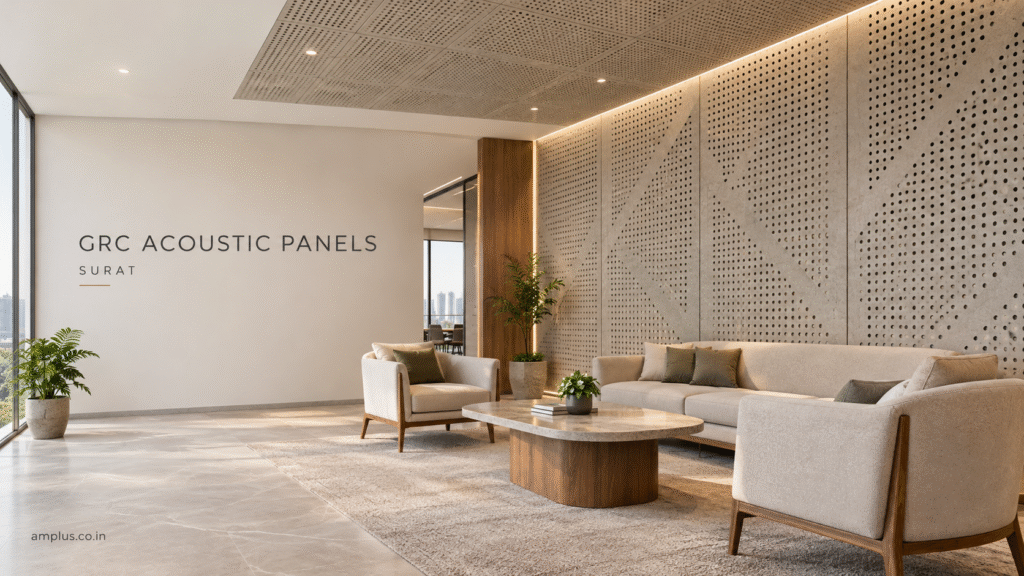
In interior architecture, GRC panels are utilized for feature walls, decorative cladding, column covers, perforated screens, and ceiling elements. Their stone-like texture, high impact resistance, and durability make them suitable for high-traffic commercial spaces, lobbies, and premium corporate interiors.
GRC vs. GRG: Understanding the Difference
A common point of confusion among designers and builders is the distinction between GRC (Glass Fibre Reinforced Concrete) and GRG (Glass Reinforced Gypsum). While both utilize glass fibre reinforcement to achieve intricate molding and design flexibility, their core compositions and performance characteristics differ significantly.
| Feature | GRC (Glass Fibre Reinforced Concrete) | GRG (Glass Reinforced Gypsum) |
| Base Material | Cementitious composite (Cement, fine aggregates, water, glass fibres) | Gypsum-based plaster reinforced with glass fibres |
| Composition & Weight | Dense, robust, cement-based; heavier than gypsum but lighter than precast concrete | Lightweight gypsum matrix designed primarily for interior ceilings |
| Primary Applications | Interior/exterior wall cladding, feature facades, columns, decorative screens, durable architectural elements | Interior ceilings, decorative moldings, curved ceiling boards, acoustic ceiling tiles |
| Moisture Resistance | High natural resistance to moisture and humidity; suitable for semi-exposed and interior zones | Best suited for dry indoor environments unless treated with specialized moisture-resistant formulations |
| Acoustic Considerations | Acts primarily as a reflective dense surface unless engineered with perforation, slots, or acoustic backing | Frequently engineered into perforated or fissured acoustic ceiling and wall systems |
Note: Specific material performance, thickness, and load-bearing capacities vary by manufacturer and product engineering.
Can GRC Panels Improve Acoustic Performance?
One of the most vital technical distinctions in interior acoustic design is understanding the difference between acoustic absorption, sound insulation, and architectural reflection.
- Architectural & Decorative GRC: Standard solid GRC panels are dense and rigid. As cementitious surfaces, they tend to reflect sound waves rather than absorb them, which can potentially increase reverberation time in an untreated room.
- Acoustic GRC Systems: To achieve sound management, GRC panels can be custom-engineered with precision perforations, micro-slots, or patterned relief designs. When installed with an engineered air cavity behind the panel and combined with sound-absorbing acoustic backing (such as mineral wool or specialized acoustic fleece), these specialized GRC systems can contribute effectively to sound absorption and reverberation control. For projects requiring dedicated acoustic treatment, mineral fibre ceiling tiles can also be explored as an option for improving indoor sound absorption.
- Sound Insulation vs. Treatment: Decorative GRC wall panels enhance interior aesthetics and can aid in diffusing sound reflections when properly patterned, but they do not automatically serve as complete soundproofing barriers between separate rooms.
Designers specifying GRC for acoustic control should always request manufacturer test data, Noise Reduction Coefficient (NRC) ratings, and installation specifications tailored to the project’s acoustic requirements.
Design Benefits and Applications of GRC Panels in Surat
Surat’s booming commercial and residential real estate sectors demand interior solutions that combine aesthetic distinction with long-term durability. GRC panels offer several strategic advantages across various project typologies:
Offices and Corporate Interiors
Modern corporate offices in Surat—ranging from diamond trading houses to tech startups—benefit from feature walls and reception backdrops crafted from textured GRC. Integrating commercial ceiling solutions can further enhance workspace aesthetics while accommodating lighting and other essential building services. When paired with proper acoustic detailing, these installations reduce ambient noise while projecting corporate stability and sophistication.
Conference and Meeting Rooms
Executive boardrooms require speech clarity and controlled reverberation. Perforated GRC wall panels integrated with concealed acoustic insulation help manage sound reflections, ensuring clear communication during meetings and presentations.
Hospitality and Retail Spaces
Hotels, fine-dining restaurants, and luxury retail stores require striking visual textures. GRC cladding provides seamless, monolithic stone aesthetics without the excessive structural weight of solid stone masonry. Designers can also consider open cell ceiling systems to create visually appealing ceiling designs for contemporary hospitality and retail environments.
Residential and Architectural Applications
In luxury residences, custom-molded GRC panels serve as dramatic TV feature walls, double-height lobby accents, and sculptural partition screens that elevate overall interior character.
What to Consider Before Choosing GRC Panels in Surat?
Before finalizing GRC panels for your interior project, consider the following technical and logistical factors:
- Structural Support: Ensure that the wall or ceiling substrate can support the weight of cement-based panels, and utilize approved mechanical fixing systems.
- Service Integration: Coordinate panel placement early with HVAC, electrical, and lighting consultants to accommodate diffusers, conduits, and light fixtures.
- Finishing & Sealing: Select appropriate sealants and surface coatings to match the desired interior design palette—whether raw industrial concrete, painted finishes, or polished textures.
- Acoustic Engineering: If noise reduction is a primary goal, verify whether the selected GRC panels require specialized backer materials and air cavities to meet target NRC performance levels.
Conclusion and Next Steps
GRC panels offer an exceptional blend of architectural strength, tactile texture, and design versatility for modern interiors in Surat. While solid concrete surfaces primarily serve decorative and structural roles, engineered acoustic GRC configurations can successfully bridge the gap between striking aesthetics and effective sound management.
To explore how advanced ceiling systems, acoustic panels, and interior architectural solutions can elevate your next project, visit Amplus website, or consult with our expert team for tailored guidance.
Frequently Asked Questions
Are GRC panels suitable for residential interior walls?
Yes, GRC panels are frequently used in high-end residential interiors for feature walls, lobbies, and architectural accents due to their unique textures and premium finish.
Do standard GRC panels absorb sound?
Standard solid GRC panels are dense and tend to reflect sound. For sound absorption, panels must be specifically engineered with perforations, open-area ratios, and appropriate acoustic backing.
What is the main difference between GRC and GRG?
GRC is cement-based and highly durable for versatile indoor and exterior applications, whereas GRG is gypsum-based and primarily designed for lightweight interior ceiling and wall features.
Where can I view architectural and acoustic panel samples in Surat?
You can visit the Amplus Experience Center situated at Bhatar-Vesu Canal Road, Surat, to explore a wide range of professional ceiling and interior solutions.