Acoustic comfort is no longer an afterthought in modern commercial interior design; it is a fundamental requirement. Poor acoustics can severely disrupt conversations, break concentration, and compromise privacy, ultimately impacting the user experience. When addressing reverberation and background noise, architects and workspace designers typically evaluate two primary solutions: acoustic ceilings and acoustic panels. Understanding how these overhead and wall-based treatments differ is essential for creating productive, acoustically balanced environments.
What are Acoustic Ceilings?
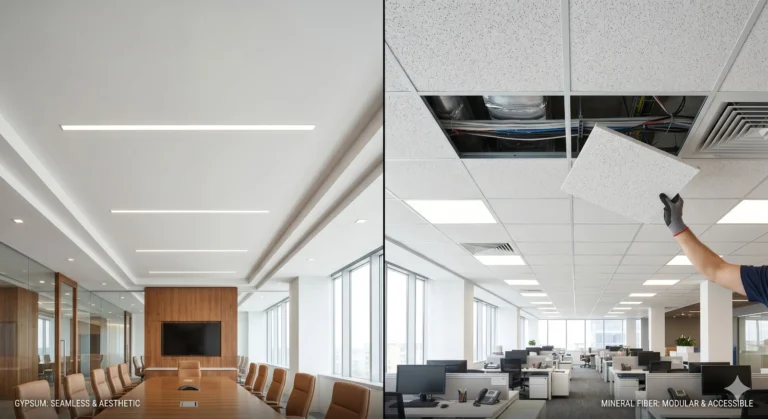
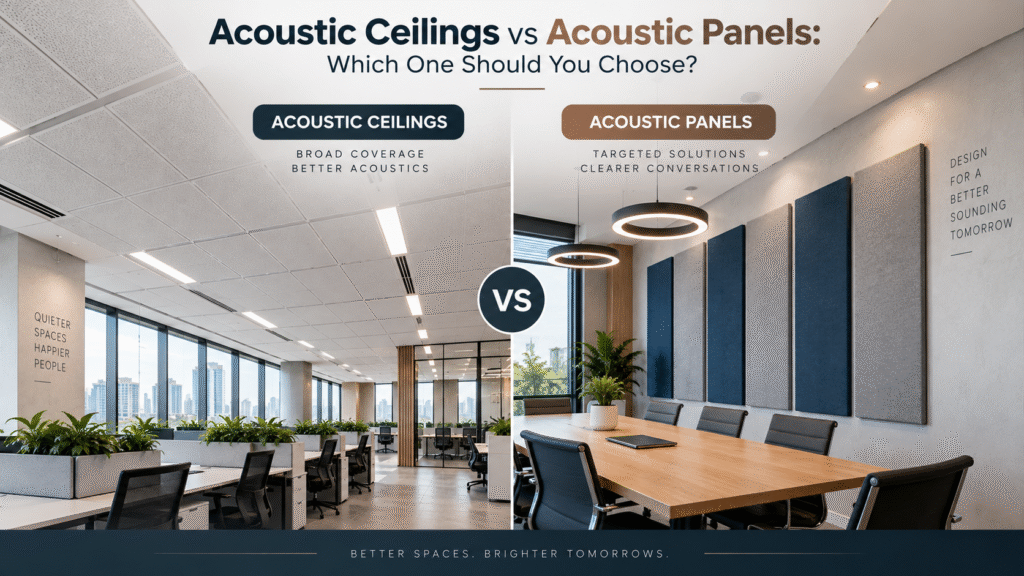
Acoustic ceilings are suspended systems engineered to absorb sound and reduce reverberation across broad interior spaces. Typically installed as continuous false ceilings, baffles, or discrete clouds, they capture sound waves before reflection off structural soffits. In commercial interiors, acoustic ceilings are frequently considered the baseline acoustic treatment because they utilize the largest uninterrupted surface area in a room. They are highly relevant in open-plan offices and public areas where comprehensive sound control is necessary.
What are Acoustic Panels?
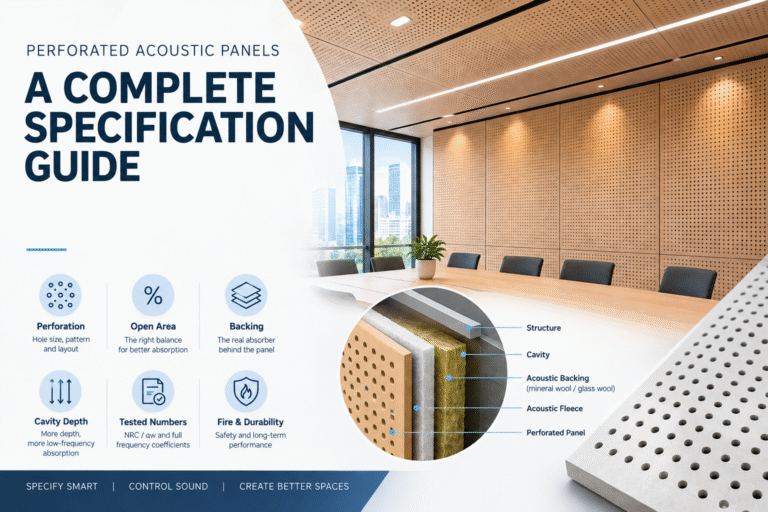
Acoustic panels are localized sound-absorbing elements applied to vertical surfaces or suspended independently to treat specific acoustic issues. Unlike full-coverage grids, panels are positioned on walls or columns near the noise source. They play a critical role in minimizing flutter echoes and improving speech intelligibility by absorbing reflections at ear level. Acoustic panels are used in meeting rooms, collaborative zones, and presentation spaces where targeted intervention supports clear communication.
Acoustic Ceilings vs Acoustic Panels
While both solutions enhance acoustic comfort, they operate differently within a space.
| Factor | Beam Line Machine | CNC Beam Drilling Machine |
| Primary Purpose | Comprehensive, multi-process beam fabrication | Automated drilling and accurate hole-making |
| Processing Scope | Broad (performs multiple distinct operations) | Focused primarily on drilling |
| Drilling | Yes | Yes (core function) |
| Marking / Scribing | Often included or available as an option | Rare (sometimes basic marking only) |
| Cutting | Often included (sawing, plasma, or thermal) | Generally not included |
| Automation | High (often features automated material handling) | High (CNC positioning and feeding) |
| Typical Applications | High-volume structural steel fabrication | Operations focused heavily on bolted connections |
| Suitable Production Needs | Fabricators needing all-in-one part completion | Fabricators needing rapid, repeatable hole patterns |
Key Factors to Consider Before Choosing
Before finalizing an acoustic strategy, interior consultants and facility managers must evaluate several practical decision factors:
- Room size and geometry: Room dimensions strongly influence acoustic behavior. Large spaces require broad ceiling coverage to prevent sound travel, while narrow rooms suffer from flutter echoes requiring panels.
- Noise requirements: Understand the exact acoustic problem. High background noise necessitates a different approach than speech clarity issues.
- Ceiling design: If ceilings accommodate complex HVAC systems, modular acoustic panels offer a less intrusive installation than continuous ceilings.
- Wall surfaces: Hard surfaces like glass partitions exacerbate acoustic issues, making the introduction of soft panels beneficial.
- Speech clarity: Environments prioritizing speech intelligibility often require wall-mounted panels to absorb early reflections.
- Overall strategy: Effective design requires treating the room as a complete environment rather than selecting products in isolation.
Acoustic Ceilings, Acoustic Panels or Both
Acoustic ceilings should be considered for large, open-plan Indian corporate offices where comprehensive overhead coverage is necessary to manage ambient noise. Conversely, acoustic panels are highly effective for focused areas like conference rooms or co-working zones that require targeted treatment to prevent echoes and maintain privacy. Often, spaces benefit from combining both. In dynamic commercial interiors, combining overhead baffles with strategically placed wall panels provides a holistic solution balancing overall sound absorption with localized speech clarity.
At Amplus, professional interior planning integrates acoustic comfort seamlessly with workspace functionality and sophisticated design. Whether incorporating expansive metal baffles or acoustic wall tiles, the focus remains on enhancing user experience through effective space planning. By understanding the unique acoustic demands of modern Indian workplaces, intelligent ceiling and interior solutions are tailored to meet both aesthetic and acoustic requirements.
Conclusion
Ultimately, neither acoustic ceilings nor panels are universally superior. The most appropriate solution depends entirely on the specific acoustic problem, room geometry, existing surface conditions, and functional design objectives. By evaluating the unique dynamics of a workspace, architects and facility managers can implement a balanced acoustic strategy that ensures comfort, enhances focus, and elevates the interior environment.
Frequently Asked Questions
What is the difference between acoustic ceilings and acoustic panels?
Acoustic ceilings provide broad, overhead sound absorption across a room, whereas acoustic panels offer targeted, localized noise reduction, typically mounted on walls.
Are acoustic panels suitable for office spaces?
Yes, they are highly effective in meeting rooms, quiet zones, and collaborative spaces where localized sound control and speech clarity are essential.
Do acoustic ceilings reduce reverberation?
Yes, by capturing sound waves before they reflect off hard structural soffits, acoustic ceilings significantly reduce overall room reverberation and ambient noise.
Can acoustic ceilings and acoustic panels be used together?
Absolutely. Combining both solutions is often the most effective strategy for managing both ambient background noise and direct sound reflections.