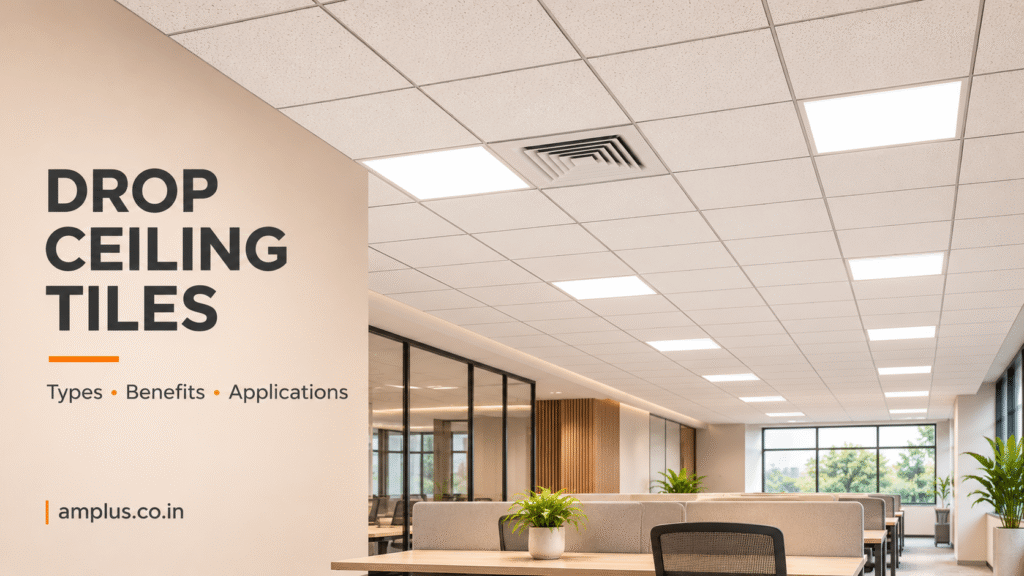
Drop ceiling tiles are removable panels that form the visible surface of a suspended ceiling system. Also known as lay-in ceiling tiles, they rest within a lightweight metal grid suspended below the structural slab or roof deck by wires or hangers. This setup creates an overhead ceiling cavity—a functional plenum space used to route building services such as electrical wiring, HVAC ductwork, fire suppression pipes, and lighting fixtures.
A complete drop ceiling system comprises the structural suspension grid, hanger wires, perimeter mouldings, and individual ceiling tiles. While individual tiles provide aesthetic closure and functional properties like sound absorption, the entire grid assembly determines structural integrity, load-bearing capacity, and overall system performance. Drop ceiling systems are widely specified in commercial, institutional, and modern architectural interiors across India due to their adaptability, service accessibility, and clean aesthetic.
Different Types of Drop Ceiling Tiles
Selecting the right ceiling solution requires understanding the distinct materials, characteristics, and applications of various tile types.
Mineral Fibre Ceiling Tiles
Composed of recycled paper, mineral wool, perlite, and binders, mineral fibre tiles are a commercial standard. They offer excellent sound absorption and economic viability, making them ideal for offices and classrooms.
Metal Ceiling Tiles
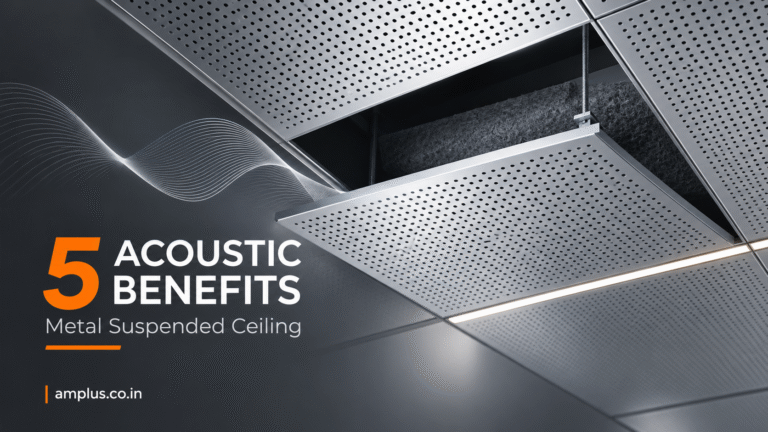
Fabricated from aluminium or galvanized steel, metal tiles provide exceptional durability and impact resistance. Available in different designs and finishes, metal modular ceiling tiles offer durability, easy maintenance, and flexible installation options.
Gypsum Ceiling Tiles
Manufactured from gypsum cores with vinyl or paper facings, these tiles offer a smooth, cleanable finish and rigid structure. They must be distinguished from continuous gypsum board false ceilings, as lay-in gypsum tiles remain fully removable.
PVC Ceiling Tiles
Lightweight and moisture-tolerant, PVC tiles are easy to handle and maintain. They suit utility areas, but specific fire and environmental ratings must be verified against project codes.
Fiberglass and Other Acoustic Ceiling Tiles
High-density fiberglass tiles deliver superior sound absorption Noise Reduction Coefficient ratings. They are specified in auditoriums, conference halls, and recording studios where precise acoustic control is paramount.
Key Benefits of Drop Ceiling Tiles
Drop ceiling systems offer several practical advantages for building owners, facility managers, and designers.
- Improved Access to Building Services- Removable tiles allow maintenance personnel to inspect and repair overhead utilities without damaging structural elements, though accessibility depends on grid layout and service density.
- Better Acoustic Management- Acoustic ceiling tiles absorb sound energy and reduce indoor reverberation. Acoustic performance depends directly on tested material properties and room coverage. Understanding the difference between soundproofing and acoustic treatment helps in selecting suitable ceiling materials for controlling indoor noise and reverberation
- Flexible Lighting and Interior Integration- The grid modularity permits seamless integration of recessed lighting, air diffusers, and smoke detectors.
- Concealment of Structural Elements and Services- Suspended ceilings effectively hide unsightly ducts, uneven concrete slabs, and wiring while maintaining an organized interior appearance.
- Variety of Designs and Finishes- Diverse textures, edge profiles, and colour options support varied interior design schemes.
Common Applications of Drop Ceiling Tiles
Drop ceiling systems adapt effectively to diverse architectural sectors when matched to specific operational requirements.
- Corporate Offices and Commercial Workspaces- Enhance acoustic comfort, conceal extensive cabling, and provide professional aesthetics.
- Educational Institutions- Support speech intelligibility in classrooms and facilitate routine maintenance access.
- Healthcare and Institutional Buildings- Certain washable, antimicrobial-treated tiles meet stringent hygiene and cleaning standards. (Note: Suitability varies by product specification).
- Retail Stores and Shopping Spaces- Accommodate dynamic lighting layouts and overhead service routing.
- Hospitality and Residential Interiors- Provide clean, finished ceilings in hotels, restaurants, and residential basements or utility zones.
Factors to Consider When Choosing Drop Ceiling Tiles
Choosing the correct ceiling tile involves evaluating several critical project parameters:
- Identify the Purpose of the Space- Align material selection with room usage, traffic, and aesthetic goals.
- Consider Material and Durability- Weigh cost against longevity, impact resistance, and structural load.
- Evaluate Acoustic Requirements- Review product-specific NRC data to differentiate between in-room sound absorption and inter-room sound insulation.
- Check Moisture and Environmental Suitability- Verify manufacturer specifications for humidity resistance, especially in coastal or damp regions like Surat, Gujarat.
- Review Fire Performance and Safety- Consult certified fire test documentation before specification.
- Consider Maintenance and Installation- Ensure grid compatibility and ease of tile replacement.
Conclusion: Choosing the Right Drop Ceiling Tiles for Your Space
Drop ceiling tiles provide a versatile, functional, and aesthetically adaptable solution for modern commercial and institutional interiors. By carefully evaluating material properties, acoustic needs, moisture resistance, and installation requirements, designers and facility managers can achieve optimal performance. To explore a curated selection of premium architectural ceiling solutions and expert guidance, visit Amplus.
Frequently Asked Questions (FAQs)
1. What are drop ceiling tiles?
Drop ceiling tiles are removable panels that sit within a suspended metal grid framework beneath the structural ceiling, forming a false ceiling that conceals utilities while providing aesthetic and functional benefits.
2. What are the different types of drop ceiling tiles?
Common types include mineral fibre, metal (aluminium/steel), gypsum-faced, PVC, and high-density fiberglass tiles, each offering unique acoustic, durability, and moisture-resistance characteristics.
3. What are the primary benefits of a drop ceiling system?
Key advantages include easy access to overhead MEP (mechanical, electrical, plumbing) services, improved acoustic control, flexible lighting integration, and concealment of structural imperfections.
4. Do all drop ceiling tiles absorb sound?
No. Acoustic performance varies significantly by material. Only tiles explicitly rated for sound absorption (such as mineral fibre or perforated metal with acoustic backing) contribute to reducing room reverberation.
5. What is the difference between a drop ceiling and a continuous false ceiling?
A drop ceiling uses a modular, removable grid system for easy plenum access, whereas a continuous false ceiling (like gypsum board) forms a solid, monolithic surface that requires dedicated access panels.