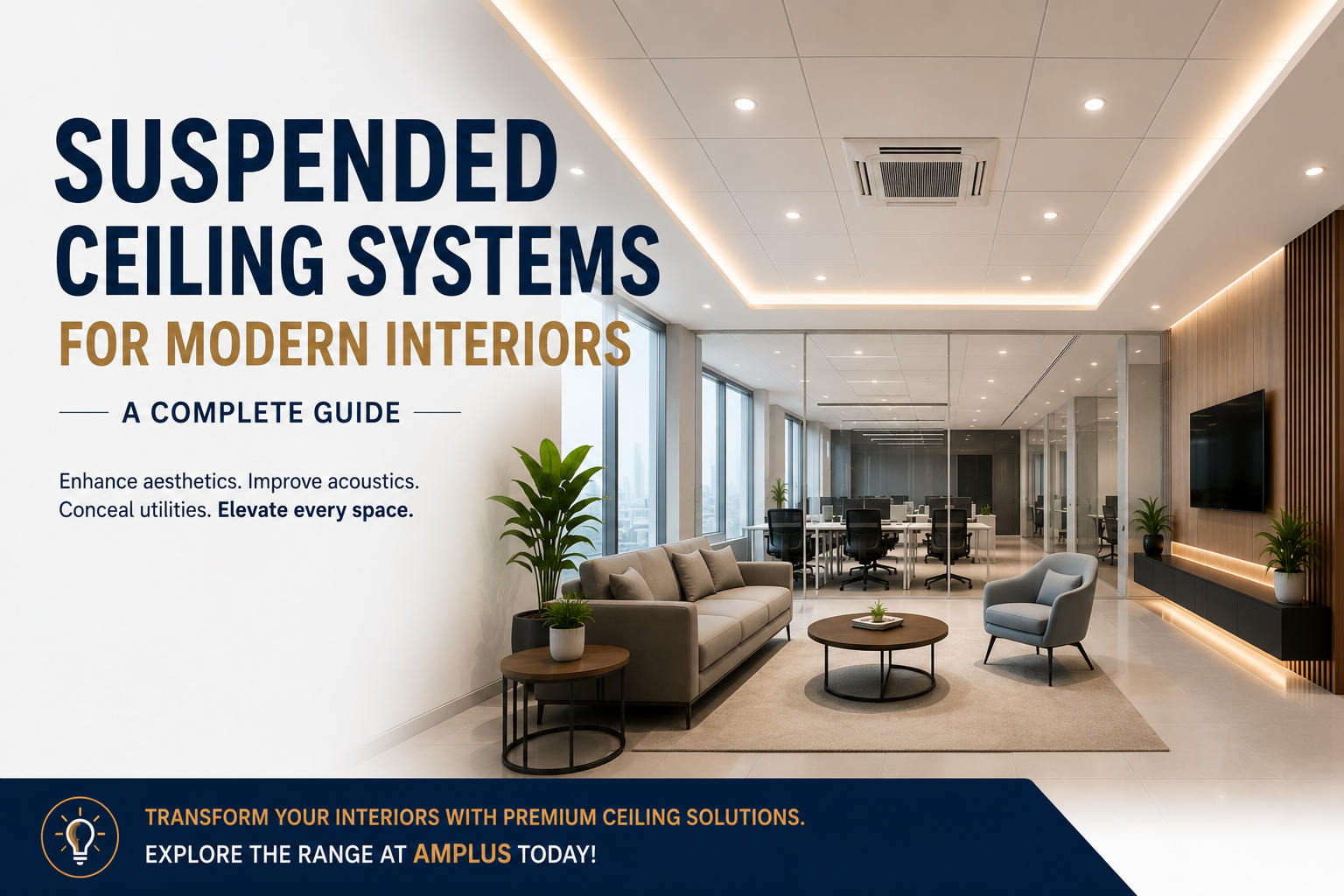
When curating modern architecture, the ceiling acts as a powerful canvas for clean, premium, and luxurious visual aesthetics. Selecting the right suspended ceiling can completely transform a room’s spatial dynamics, lighting, and acoustic performance.
In the realm of high-end commercial ceiling systems, two options consistently stand out: Open Cell Ceilings and Metal Baffle Ceilings. Both offer unique architectural advantages, but determining the ideal fit depends on your project’s specific functional requirements and design vision. This guide breaks down the core differences to help you make an informed decision.
What are Open Cell Ceilings?
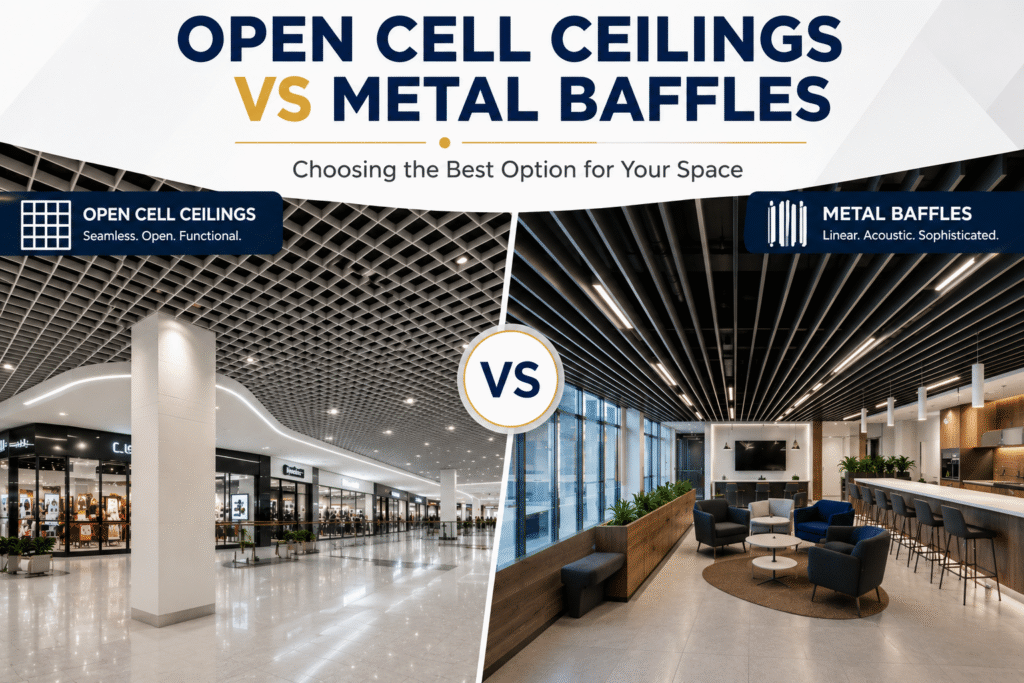
An open cell ceiling is a continuous, grid-like suspended ceiling that creates a visually seamless plane while leaving the plenum (the space above) exposed. Typically crafted from lightweight aluminum or galvanized iron, these metal ceiling systems consist of intersecting profiles that form square or rectangular “cells.”
They are highly sought after for their ability to mask structural clutter like ductwork and piping while retaining 100% accessibility and unobstructed airflow, making them a staple in modern interior design.
What are Metal Baffle Ceilings?
Metal baffle ceilings feature linear, vertically suspended panels that offer a strong, directional visual impact. Crafted from extruded or roll-formed metal, baffles create dynamic, rhythmic lines across a ceiling structure.
Beyond their premium aesthetics, metal baffles are primarily engineered for acoustic control. By exposing both sides of the panel to ambient sound waves, they significantly reduce noise reverberation in large, open-plan environments.
Open Cell Ceilings vs Metal Baffles
Here is a side-by-side comparison to help you evaluate these architectural ceilings:
| Feature | Open Cell Ceiling | Metal Baffle Ceiling |
| Appearance | Grid-like, seamless, and geometric. | Linear, contemporary, and highly directional. |
| Airflow | Exceptional; allows 100% vertical ventilation. | Good; depends on the spacing between baffles. |
| Lighting Integration | Excellent for flush or drop-in grid lighting. | Perfect for suspended pendants and linear LED strips. |
| Acoustic Performance | Minimal acoustic absorption on its own. | High acoustic enhancement; reduces echo effectively. |
| Maintenance | Very easy; open grid doesn’t collect dust easily. | Easy, though flat tops may require occasional dusting. |
| Installation | Quick, utilizing a standard modular suspension grid. | Requires specialized carriers and precise alignment. |
| Best Applications | Shopping malls, transit hubs, retail showrooms. | Corporate offices, airports, auditoriums, restaurants. |
Advantages of Open Cell Ceilings
- Unobstructed Ventilation: Ideal for buildings relying on overhead smoke extraction and robust HVAC systems.
- Modern Open Appearance: Creates an illusion of depth, making low ceilings feel taller and more expansive.
- Service Accessibility: Plumbers and electricians can effortlessly access concealed utilities without removing panels.
- Lightweight Structure: Puts minimal load on the primary ceiling framework.
Advantages of Metal Baffle Ceilings
- Luxurious Aesthetics: Delivers a sophisticated, upscale look that complements minimalist and industrial interiors alike.
- Acoustic Enhancement: Perfect for loud, high-traffic commercial spaces needing advanced sound absorption.
- Customization: Available in various depths, colors (including premium wood-grain finishes), and spacing configurations.
- Directional Flow: Can be used to naturally guide foot traffic by drawing the eye along the linear ceiling design.
Which Ceiling System Should You Choose?
Choosing the right false ceiling depends largely on the primary function of your space.
If your priority is maintaining maximum airflow, hiding heavy industrial ductwork, and keeping costs manageable for a massive retail store or supermarket, Open cell ceilings are the superior choice.
Conversely, if you are designing a premium corporate boardroom, an upscale restaurant, or a bustling airport terminal where acoustic control and striking, luxurious visual lines are paramount, Metal Baffle ceilings will deliver the high-end impact you need.
Conclusion
Both Open Cell Ceilings and Metal Baffle Ceilings bring immense value to modern commercial spaces. While open cells prioritize ventilation and seamless integration, metal baffles champion acoustic control and striking linear designs. By evaluating your project’s acoustic, visual, and maintenance needs, you can select a ceiling system that elevates your architecture.
Ready to transform your space with premium ceiling solutions? Explore the extensive range of architectural ceilings at Amplus today.
Frequently Asked Questions (FAQs)
1. Which is better for acoustics: Open Cell or Metal Baffle ceilings?
Metal baffle ceilings are superior for acoustics. Their vertical design exposes more surface area to sound waves, making them highly effective at reducing echo in large, open spaces.
2. Can I integrate air conditioning with both ceiling types?
Yes. Open cell ceilings allow air to pass directly through the grid, making them highly efficient for HVAC integration. Metal baffles also accommodate HVAC systems, typically placed in the gaps between the linear panels.
3. Are metal baffles heavier than open cell ceilings?
Generally, yes. Metal baffles often use thicker gauge metal to maintain their vertical rigidity, whereas open cell systems utilize very lightweight intersecting metal blades.
4. Which ceiling system is more cost-effective?
Open cell ceilings tend to be more cost-effective for covering massive square footage, like shopping malls, due to their lightweight materials and rapid grid-based installation.
5. How do I maintain these commercial ceiling systems?
Both require minimal maintenance. Open cells naturally resist dust buildup due to their vertical blade edges. Metal baffles may occasionally require a simple wipe-down to remove dust from their top edges.